
Our Three Step Process
May 21, 2026
AI Agentic Revolution 2026: Top 12 Platforms & Enterprise Implementation Guide
Our Three Step Process
May 21, 2026
AI Agentic Revolution 2026: Top 12 Platforms & Enterprise Implementation Guide
Discover the AI agentic revolution transforming business automation. Compare top platforms, evaluation frameworks & enterprise strategies for 2026.
AI's Impact on Marketing Technology and Future Uses
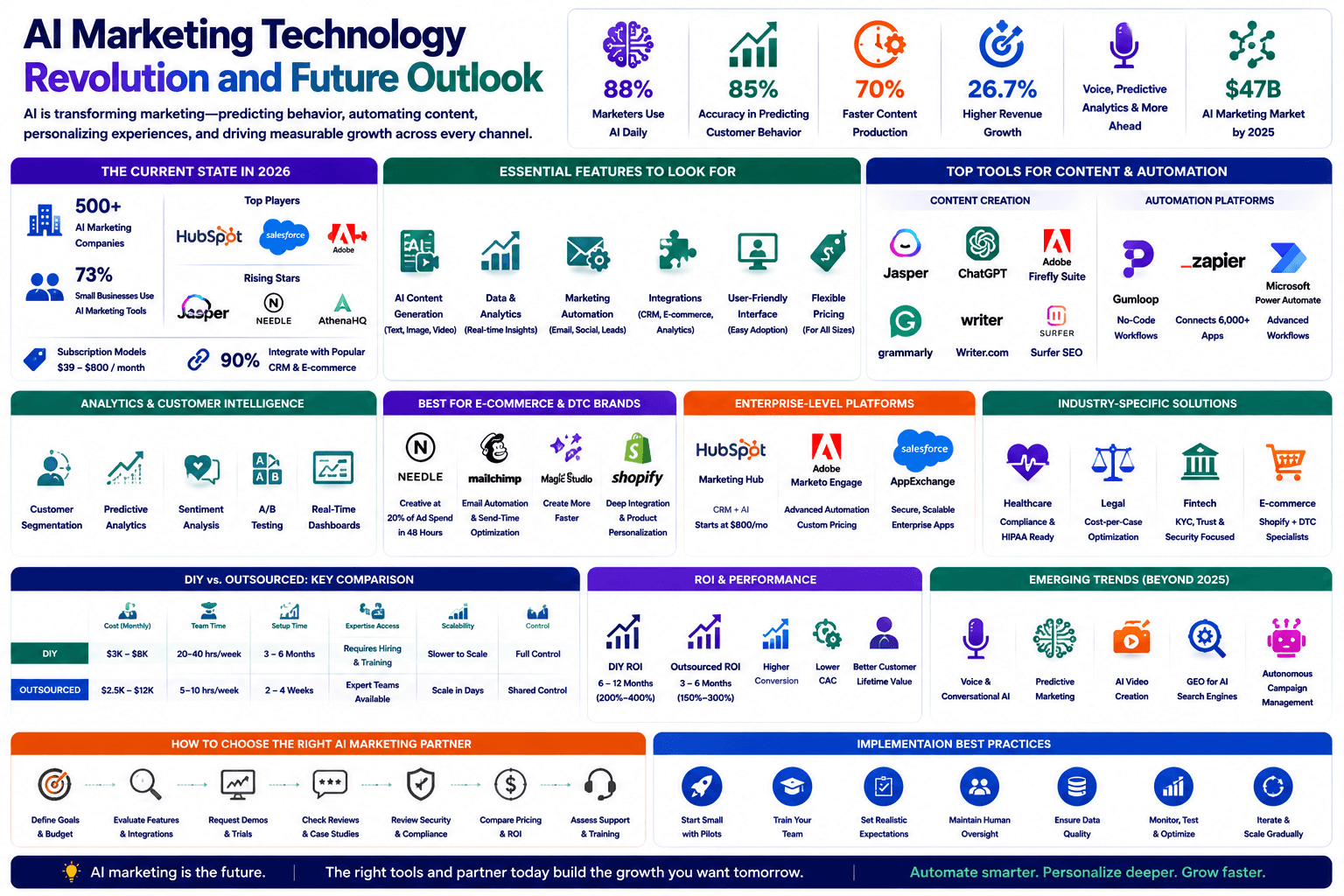
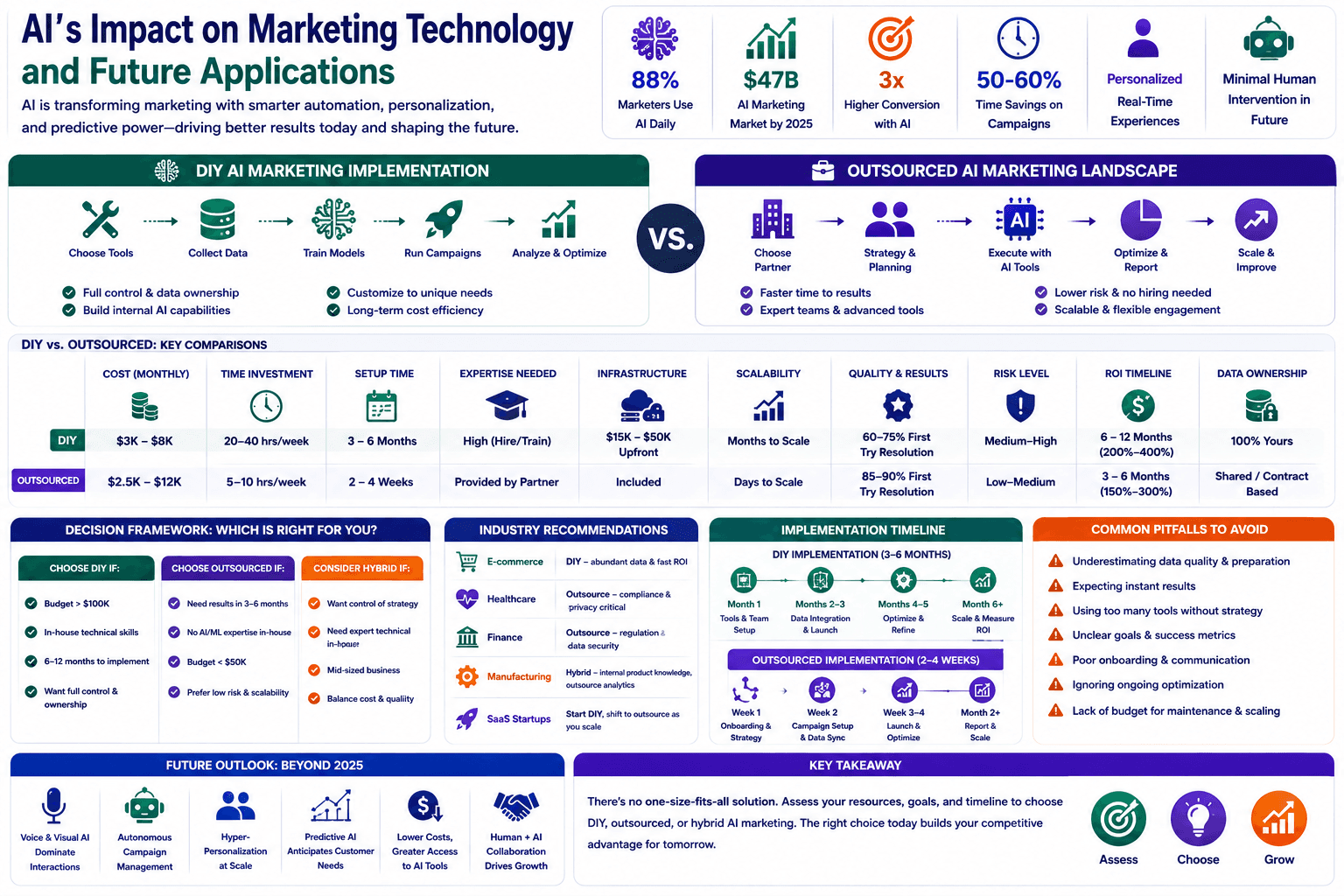
AI has revolutionized marketing technology by enabling predictive analytics, real-time personalization, and automated campaign optimization. Marketing teams leverage AI for customer segmentation, content creation, and tracking results across channels. Looking ahead, we anticipate the emergence of marketing agents that will manage entire customer journeys, from lead qualification to retention, enhancing performance based on real-time data and market trends. For more insights on this topic, check out our page on Marketing Automation Strategies.
Understanding Agentic AI: Beyond Traditional Automation
Agentic AI represents a new frontier in automation, with software capable of making decisions, handling exceptions, and managing complex tasks across business systems. Unlike traditional RPA, which adheres to predefined rules, agentic AI allows agents to understand situations, solve problems, and collaborate with other agents. This evolution transforms business automation from basic task completion to intelligent management of entire processes. Learn more about the differences in our article on RPA vs. Agentic AI.
The Move to Autonomous AI Systems in Business
By 2026, Gartner predicts that 40% of business applications will incorporate AI agents. Companies are transitioning from simple automation tools to systems that manage tasks across various departments. This shift enables businesses to automate beyond the current 30% of their processes, allowing AI agents to handle complex tasks that previously required significant human effort and coordination. For a deeper dive into this transition, visit our page on The Future of Business Automation.
Evaluation Framework for Agentic AI Platforms
When selecting agentic AI platforms, businesses should evaluate six key areas: integration with existing systems, decision-making capabilities, governance features like audit trails, ease of deployment with no-code options, transparent pricing for budgeting, and independence from specific vendors to prevent lock-in. These factors are crucial in determining whether platforms can effectively scale from prototype to full enterprise deployment. For more details, refer to our AI Platform Evaluation Guide.
Top 12 Agentic AI Solutions: A Clear Overview
The AI agentic shift has led to the development of various platforms catering to different business needs. Notable solutions include eZintegrations Goldfinch AI for system integration, Salesforce Agentforce for CRM tasks, Microsoft Copilot Studio for Office 365, ServiceNow for IT operations, UiPath for extending RPA, Automation Anywhere for process automation, Kore.ai for broad deployment, Glean for knowledge discovery, Sierra for customer support, Moveworks for employee support, Decagon for seamless experiences, and IBM watsonx Orchestrate for managing workflows. For a comprehensive comparison, check our AI Solutions Comparison Matrix.
Glean Knowledge Discovery
Glean assists businesses in finding and understanding information through a unified search across different systems. The platform constructs detailed knowledge maps, simplifying information retrieval and comprehension. It is particularly effective for companies with data dispersed across various locations. However, Glean focuses primarily on managing knowledge rather than automating processes, lacking extensive workflow management features found in some automation platforms. Explore more about knowledge management in our article on Effective Knowledge Management Strategies.
Sierra Customer Service AI
Sierra specializes in customer service automation with a personal touch, understanding customer needs and providing clear answers across platforms. Sierra's agents manage complex interactions while maintaining smooth conversations. The platform integrates well with CRM systems and offers detailed insights into customer interactions. However, Sierra is primarily designed for customer service and may not be suitable for broader enterprise automation across various departments. For insights on enhancing customer service, visit our page on Customer Experience Optimization.
Moveworks Employee Support
Moveworks automates support for IT and HR service desks, understanding employee needs and providing quick solutions through natural language processing. It connects with systems like ServiceNow, Slack, and Microsoft Teams to offer relevant support. While Moveworks excels in improving internal employee support, it has limited features for customer interactions and broader enterprise processes. For more on employee support solutions, check our article on Streamlining Employee Support.
Decagon Omnichannel Platform
Decagon provides flexible customer service automation across various channels, utilizing natural language design tools and integrating with existing CRM systems to create responsive support workflows. While Decagon handles complex customer interactions effectively, it has limited tools for low-code development and is best used alongside existing customer service platforms rather than as a standalone solution for broader enterprise automation. Learn more about omnichannel strategies in our guide on Omnichannel Customer Engagement.
IBM watsonx Orchestrate
IBM watsonx Orchestrate offers AI assistants tailored for specific business tasks within IBM environments. It features an Agent Catalog and workflow management tools that integrate seamlessly with IBM systems. This platform is ideal for companies using IBM technology, providing robust governance and compliance features. However, it requires a solid understanding of IBM systems and may not be as flexible with non-IBM technologies. For more on governance in AI, visit our page on AI Governance Best Practices.
Platform Comparison Matrix: Features and Capabilities
Different AI platforms offer unique strengths. eZintegrations excels in connecting multiple systems with over 5,000 endpoints. Salesforce leads in CRM automation, while Microsoft is optimal for Office 365 tools. ServiceNow provides top-notch IT management. Platforms like Automation Anywhere and Kore.ai offer comprehensive orchestration features. Glean specializes in information discovery, while Sierra and Decagon focus on customer service automation, each with varying complexity and pricing. For a detailed breakdown, refer to our Platform Features Overview.
Enterprise Governance and Security Requirements
Enterprise AI platforms require robust governance to manage autonomous agents effectively. Key security features include role-based access controls, audit logging, compliance monitoring, and data encryption. Organizations should implement approval workflows, exception handling, and clear decision tracking. Platforms must ensure environment isolation, API security, and compatibility with existing identity management systems. Strong governance prevents agent drift, ensures compliance, and maintains transparency in multi-agent setups. For more on security measures, check our article on Securing AI Systems.
Future Roadmap: The Next Phase of AI Agentic Revolution
The AI agentic revolution will enhance collaboration among AI systems, improve reasoning, and facilitate seamless business integration. Future advancements will feature better understanding of cause and effect, improved exception handling, and more effective task management. Enhanced memory systems, real-time learning, and stronger oversight rules will characterize future developments. Organizations should prepare for more complex automation, requiring robust monitoring systems and updated processes to manage autonomous operations effectively. For insights on future trends, visit our page on The Future of AI in Business.
Platform Selection Guide: Matching Solutions to Business Needs
Select platforms based on your technology stack and automation goals. eZintegrations Goldfinch AI is ideal for cross-system integration, while Salesforce Agentforce excels in CRM-focused tasks. Microsoft Copilot Studio is perfect for Office 365 users, and ServiceNow is suited for IT operations. Consider integration depth, governance needs, pricing clarity, and ecosystem dependencies. Evaluate deployment complexity, reasoning abilities, and long-term growth potential before making a decision. For a more detailed selection process, refer to our Platform Selection Framework.
Discover the AI agentic revolution transforming business automation. Compare top platforms, evaluation frameworks & enterprise strategies for 2026.
AI's Impact on Marketing Technology and Future Uses
AI has revolutionized marketing technology by enabling predictive analytics, real-time personalization, and automated campaign optimization. Marketing teams leverage AI for customer segmentation, content creation, and tracking results across channels. Looking ahead, we anticipate the emergence of marketing agents that will manage entire customer journeys, from lead qualification to retention, enhancing performance based on real-time data and market trends. For more insights on this topic, check out our page on Marketing Automation Strategies.
Understanding Agentic AI: Beyond Traditional Automation
Agentic AI represents a new frontier in automation, with software capable of making decisions, handling exceptions, and managing complex tasks across business systems. Unlike traditional RPA, which adheres to predefined rules, agentic AI allows agents to understand situations, solve problems, and collaborate with other agents. This evolution transforms business automation from basic task completion to intelligent management of entire processes. Learn more about the differences in our article on RPA vs. Agentic AI.
The Move to Autonomous AI Systems in Business
By 2026, Gartner predicts that 40% of business applications will incorporate AI agents. Companies are transitioning from simple automation tools to systems that manage tasks across various departments. This shift enables businesses to automate beyond the current 30% of their processes, allowing AI agents to handle complex tasks that previously required significant human effort and coordination. For a deeper dive into this transition, visit our page on The Future of Business Automation.
Evaluation Framework for Agentic AI Platforms
When selecting agentic AI platforms, businesses should evaluate six key areas: integration with existing systems, decision-making capabilities, governance features like audit trails, ease of deployment with no-code options, transparent pricing for budgeting, and independence from specific vendors to prevent lock-in. These factors are crucial in determining whether platforms can effectively scale from prototype to full enterprise deployment. For more details, refer to our AI Platform Evaluation Guide.
Top 12 Agentic AI Solutions: A Clear Overview
The AI agentic shift has led to the development of various platforms catering to different business needs. Notable solutions include eZintegrations Goldfinch AI for system integration, Salesforce Agentforce for CRM tasks, Microsoft Copilot Studio for Office 365, ServiceNow for IT operations, UiPath for extending RPA, Automation Anywhere for process automation, Kore.ai for broad deployment, Glean for knowledge discovery, Sierra for customer support, Moveworks for employee support, Decagon for seamless experiences, and IBM watsonx Orchestrate for managing workflows. For a comprehensive comparison, check our AI Solutions Comparison Matrix.
Glean Knowledge Discovery
Glean assists businesses in finding and understanding information through a unified search across different systems. The platform constructs detailed knowledge maps, simplifying information retrieval and comprehension. It is particularly effective for companies with data dispersed across various locations. However, Glean focuses primarily on managing knowledge rather than automating processes, lacking extensive workflow management features found in some automation platforms. Explore more about knowledge management in our article on Effective Knowledge Management Strategies.
Sierra Customer Service AI
Sierra specializes in customer service automation with a personal touch, understanding customer needs and providing clear answers across platforms. Sierra's agents manage complex interactions while maintaining smooth conversations. The platform integrates well with CRM systems and offers detailed insights into customer interactions. However, Sierra is primarily designed for customer service and may not be suitable for broader enterprise automation across various departments. For insights on enhancing customer service, visit our page on Customer Experience Optimization.
Moveworks Employee Support
Moveworks automates support for IT and HR service desks, understanding employee needs and providing quick solutions through natural language processing. It connects with systems like ServiceNow, Slack, and Microsoft Teams to offer relevant support. While Moveworks excels in improving internal employee support, it has limited features for customer interactions and broader enterprise processes. For more on employee support solutions, check our article on Streamlining Employee Support.
Decagon Omnichannel Platform
Decagon provides flexible customer service automation across various channels, utilizing natural language design tools and integrating with existing CRM systems to create responsive support workflows. While Decagon handles complex customer interactions effectively, it has limited tools for low-code development and is best used alongside existing customer service platforms rather than as a standalone solution for broader enterprise automation. Learn more about omnichannel strategies in our guide on Omnichannel Customer Engagement.
IBM watsonx Orchestrate
IBM watsonx Orchestrate offers AI assistants tailored for specific business tasks within IBM environments. It features an Agent Catalog and workflow management tools that integrate seamlessly with IBM systems. This platform is ideal for companies using IBM technology, providing robust governance and compliance features. However, it requires a solid understanding of IBM systems and may not be as flexible with non-IBM technologies. For more on governance in AI, visit our page on AI Governance Best Practices.
Platform Comparison Matrix: Features and Capabilities
Different AI platforms offer unique strengths. eZintegrations excels in connecting multiple systems with over 5,000 endpoints. Salesforce leads in CRM automation, while Microsoft is optimal for Office 365 tools. ServiceNow provides top-notch IT management. Platforms like Automation Anywhere and Kore.ai offer comprehensive orchestration features. Glean specializes in information discovery, while Sierra and Decagon focus on customer service automation, each with varying complexity and pricing. For a detailed breakdown, refer to our Platform Features Overview.
Enterprise Governance and Security Requirements
Enterprise AI platforms require robust governance to manage autonomous agents effectively. Key security features include role-based access controls, audit logging, compliance monitoring, and data encryption. Organizations should implement approval workflows, exception handling, and clear decision tracking. Platforms must ensure environment isolation, API security, and compatibility with existing identity management systems. Strong governance prevents agent drift, ensures compliance, and maintains transparency in multi-agent setups. For more on security measures, check our article on Securing AI Systems.
Future Roadmap: The Next Phase of AI Agentic Revolution
The AI agentic revolution will enhance collaboration among AI systems, improve reasoning, and facilitate seamless business integration. Future advancements will feature better understanding of cause and effect, improved exception handling, and more effective task management. Enhanced memory systems, real-time learning, and stronger oversight rules will characterize future developments. Organizations should prepare for more complex automation, requiring robust monitoring systems and updated processes to manage autonomous operations effectively. For insights on future trends, visit our page on The Future of AI in Business.
Platform Selection Guide: Matching Solutions to Business Needs
Select platforms based on your technology stack and automation goals. eZintegrations Goldfinch AI is ideal for cross-system integration, while Salesforce Agentforce excels in CRM-focused tasks. Microsoft Copilot Studio is perfect for Office 365 users, and ServiceNow is suited for IT operations. Consider integration depth, governance needs, pricing clarity, and ecosystem dependencies. Evaluate deployment complexity, reasoning abilities, and long-term growth potential before making a decision. For a more detailed selection process, refer to our Platform Selection Framework.
Other Blogs
Other Blogs
Check our other project Blogs with useful insight and information for your businesses
Other Blogs
Other Blogs
Check our other project Blogs with useful insight and information for your businesses