
Our Three Step Process
May 26, 2026
AI Growth Strategy Consultant: Your 100-Day Implementation Guide for 2026
Our Three Step Process
May 26, 2026
AI Growth Strategy Consultant: Your 100-Day Implementation Guide for 2026
Expert AI growth strategy consultant guide. Learn proven frameworks, implementation steps, and ROI metrics for successful AI projects in 2026.
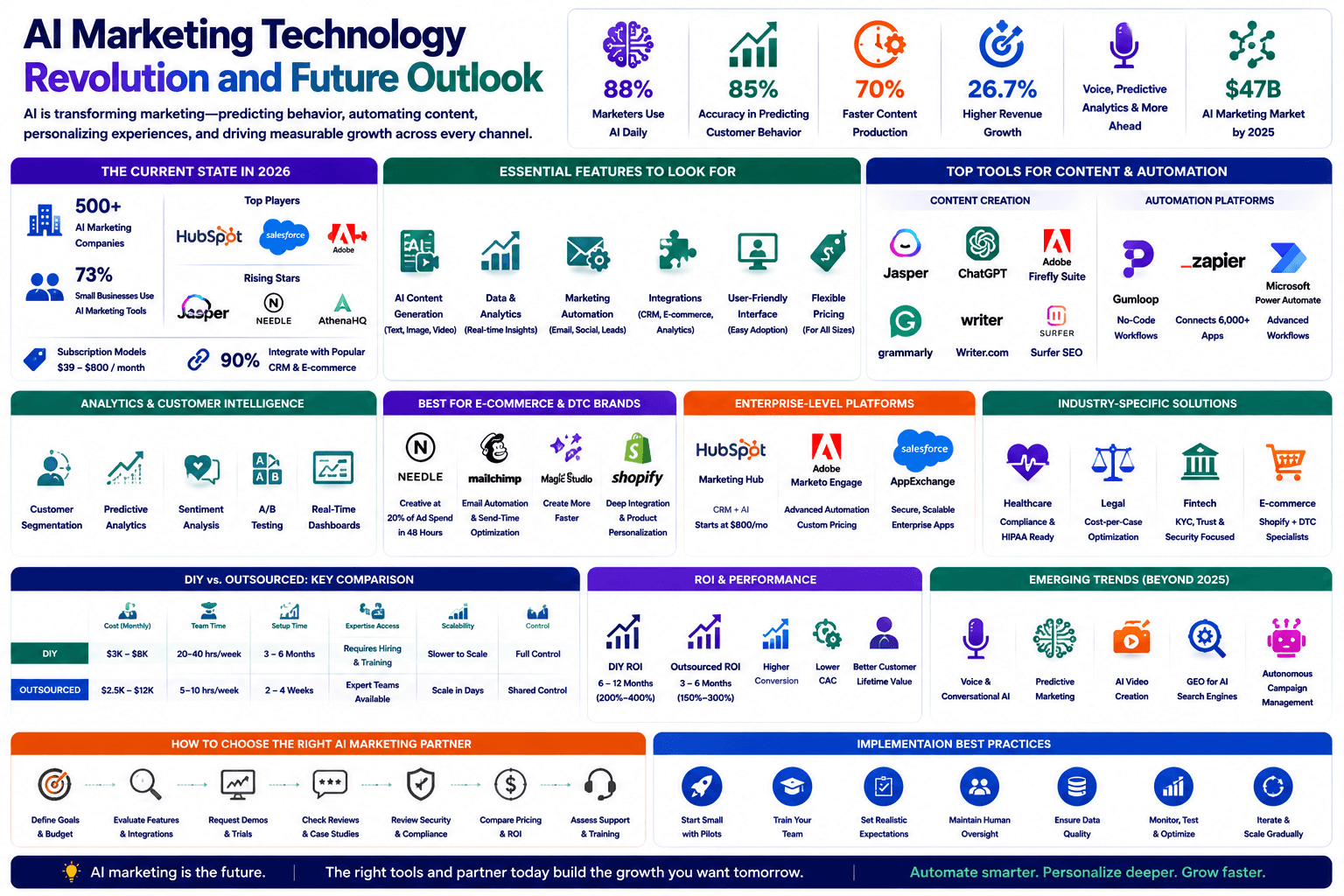
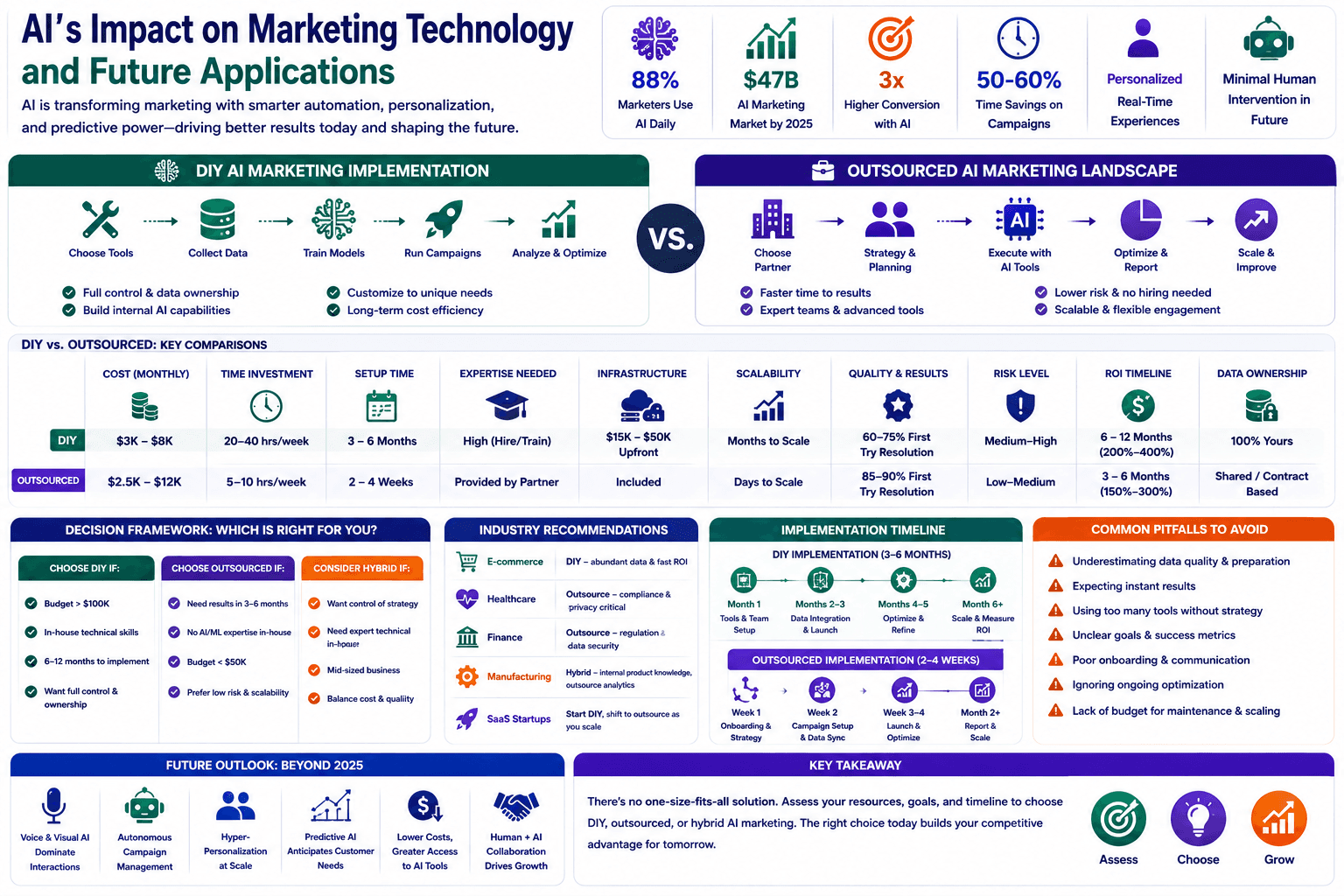
AI's Impact on Marketing Technology and Future Path
AI has revolutionized marketing technology through automated customer segmentation, predictive insights, and real-time personalization. Marketing teams leverage machine learning for pricing strategies, content optimization, and lead scoring, enhancing conversion rates by 40%. By 2027, AI-driven tools are expected to manage 80% of customer interactions, with advanced networks predicting behavior with 95% accuracy. Future trends include self-running campaigns, voice-led customer journeys, and AI-generated content that adapts instantly to individual preferences. For more on how AI is transforming marketing, check out our page on AI in Marketing Strategies.
Why Most AI Growth Projects Fail
Many AI growth projects falter within the first 100 days due to inadequate planning and unrealistic expectations. Companies often plunge into technical work without training their teams or establishing clear objectives. Common pitfalls include misaligned leadership, unprepared data, scope creep, and weak change management. Organizations that emphasize careful planning and stakeholder education are 5.3 times more likely to succeed than those that rush into technology adoption. Learn more about overcoming these challenges in our article on Common AI Project Pitfalls.
Week 1-2: Strategic Foundation and Team Alignment
During the initial two weeks, focus on educating your team about AI fundamentals and identifying valuable use cases. Conduct AI workshops for key team members, review current business processes, and assess data quality. Establish clear objectives and secure support from top executives. Form teams with business leaders, project managers, and change leaders. By the end of week two, you should have identified three top AI use cases, trained a core team, and established baseline performance metrics for comparison. For a detailed guide on team alignment, visit our Team Collaboration in AI Projects page.
Week 3-4: Data Infrastructure and Process Integration
In weeks three and four, prepare your data foundation and map integration points. Audit your data to identify quality gaps and establish cleaning methods. Design data pipelines to connect current systems with planned AI solutions. Map existing workflows to determine where AI can integrate without disrupting operations. Set up rules for data access and security. Decide on technical architecture, choosing between cloud or on-premises deployment. Test integration with existing business systems to ensure compatibility. For insights on data management, refer to our Data Quality Best Practices.
Week 5-6: Pilot Development and Initial Testing
Launch your first AI pilot using selected use cases. Implement the AI solutions and connect them to the data pipelines. Have the core team test the system to identify any gaps. Train initial users on the new AI tools and gather their feedback. Monitor system performance and data accuracy during testing. Document any technical issues and user concerns for resolution. Establish baseline metrics to measure the pilot's success. For more on pilot testing, check our AI Pilot Testing Framework.
Week 7-8: Production Deployment and Performance Optimization
Deploy your tested AI pilot to the full production environment. Closely monitor system performance and address any technical issues promptly. Enhance AI model accuracy using real-world data. Train team members on the new AI workflows and establish regular performance checks. Adjust integration points between AI tools and existing systems. Document all processes for future scaling. Explore our Performance Optimization Techniques for further strategies.
Weeks 9-12: Scaling and Advanced Implementation
Expand successful AI projects to additional departments and use cases. Incorporate complex AI features like predictive analytics and automated decision-making. Develop standard processes for quicker rollouts. Establish centers of excellence within your organization. Build advanced monitoring and governance systems. Explore new AI technologies for a competitive edge. Plan to integrate with enterprise systems and third-party platforms to develop a comprehensive AI ecosystem. For scaling strategies, visit our Scaling AI Solutions page.
Key Metrics to Track During Your First 100 Days
Monitor user engagement, aiming for 70% by week 6. Measure time savings and process automation improvements. Track data quality enhancements and system uptime. Calculate cost savings and revenue changes. Assess team satisfaction and training completion. Record error rates and issue resolution times. Evaluate compliance and security incident reports. Ensure seamless integration with existing systems and workflows. For a comprehensive list of metrics, see our AI Metrics Dashboard.
The Role of an AI Growth Strategy Consultant
An AI growth strategy consultant bridges the gap between technical implementation and business goals in your first 100 days. They provide expertise in project selection, vendor choice, and change management, which internal teams may lack. Consultants accelerate project timelines by 40% and reduce failure rates using proven methods. They establish governance, ensure compliance, and educate your team. Most importantly, they prevent costly project expansions and maintain a focus on clear business outcomes rather than technical experiments. Learn more about the benefits of consulting in our AI Consulting Services.
Budget Planning and Resource Allocation
Allocate your AI budget with 40% for technology, 35% for talent and training, and 25% for change management. Initial costs for focused pilots range from £50,000 to £150,000. Include ongoing expenses for cloud computing, data storage, and maintenance. Maintain a 20% reserve for unforeseen needs. Many underestimate training costs, typically ranging from £5,000 to £10,000 per team member. Balance initial spending with phased rollouts to manage cash flow effectively. For budgeting tips, check our AI Budgeting Guide.
Regulatory Compliance and Risk Management
Begin with GDPR compliance by establishing data governance frameworks and user consent systems. Form AI ethics committees to ensure algorithmic fairness and bias checks. Maintain records of all AI decisions for audits. Plan for AI failures or data breaches. Review compliance every 30 days during implementation. Consider hiring legal experts in AI regulations, as UK AI rules will continue evolving through 2026. For more on compliance, visit our AI Compliance Framework.
Building Internal AI Capabilities vs External Partnerships
In the first 100 days, combine building internal skills with external expertise. Train your team on AI basics and collaborate with specialists for technical tasks. Engage an AI strategy consultant for guidance and vendor selection. Develop team members who understand both your business and AI. Plan to reduce reliance on external help by training your current team. For ongoing AI maintenance and updates, consider long-term partnerships instead of one-time projects. Explore our Building Internal AI Capabilities page for more insights.
Expected ROI Timeline and Measurement Framework
Most AI projects yield results by week 6, with full ROI realized in 18-36 months. Track efficiency, cost savings, and revenue growth weekly. Set baseline metrics before starting. Expect 20-40% efficiency boosts in the first 100 days for customer service and marketing. Record time savings, error reduction, and user adoption rates. Be realistic: initial costs are high, but benefits grow rapidly after month 6 as processes optimize. For a detailed ROI framework, see our AI ROI Measurement.
Preparing for Long-term AI Integration Beyond 100 Days
Your first 100 days lay the foundation for sustained AI growth. Plan quarterly reviews to assess performance and identify new opportunities. Build internal AI skills with ongoing training programs. Partner with technology vendors for continuous support. Create a roadmap to expand successful pilots to other departments. Stay informed about new AI technologies that could enhance your strategy. Develop governance frameworks for ethical AI use and compliance as you scale operations across the organization. For long-term strategies, visit our Long-term AI Integration page.
Expert AI growth strategy consultant guide. Learn proven frameworks, implementation steps, and ROI metrics for successful AI projects in 2026.
AI's Impact on Marketing Technology and Future Path
AI has revolutionized marketing technology through automated customer segmentation, predictive insights, and real-time personalization. Marketing teams leverage machine learning for pricing strategies, content optimization, and lead scoring, enhancing conversion rates by 40%. By 2027, AI-driven tools are expected to manage 80% of customer interactions, with advanced networks predicting behavior with 95% accuracy. Future trends include self-running campaigns, voice-led customer journeys, and AI-generated content that adapts instantly to individual preferences. For more on how AI is transforming marketing, check out our page on AI in Marketing Strategies.
Why Most AI Growth Projects Fail
Many AI growth projects falter within the first 100 days due to inadequate planning and unrealistic expectations. Companies often plunge into technical work without training their teams or establishing clear objectives. Common pitfalls include misaligned leadership, unprepared data, scope creep, and weak change management. Organizations that emphasize careful planning and stakeholder education are 5.3 times more likely to succeed than those that rush into technology adoption. Learn more about overcoming these challenges in our article on Common AI Project Pitfalls.
Week 1-2: Strategic Foundation and Team Alignment
During the initial two weeks, focus on educating your team about AI fundamentals and identifying valuable use cases. Conduct AI workshops for key team members, review current business processes, and assess data quality. Establish clear objectives and secure support from top executives. Form teams with business leaders, project managers, and change leaders. By the end of week two, you should have identified three top AI use cases, trained a core team, and established baseline performance metrics for comparison. For a detailed guide on team alignment, visit our Team Collaboration in AI Projects page.
Week 3-4: Data Infrastructure and Process Integration
In weeks three and four, prepare your data foundation and map integration points. Audit your data to identify quality gaps and establish cleaning methods. Design data pipelines to connect current systems with planned AI solutions. Map existing workflows to determine where AI can integrate without disrupting operations. Set up rules for data access and security. Decide on technical architecture, choosing between cloud or on-premises deployment. Test integration with existing business systems to ensure compatibility. For insights on data management, refer to our Data Quality Best Practices.
Week 5-6: Pilot Development and Initial Testing
Launch your first AI pilot using selected use cases. Implement the AI solutions and connect them to the data pipelines. Have the core team test the system to identify any gaps. Train initial users on the new AI tools and gather their feedback. Monitor system performance and data accuracy during testing. Document any technical issues and user concerns for resolution. Establish baseline metrics to measure the pilot's success. For more on pilot testing, check our AI Pilot Testing Framework.
Week 7-8: Production Deployment and Performance Optimization
Deploy your tested AI pilot to the full production environment. Closely monitor system performance and address any technical issues promptly. Enhance AI model accuracy using real-world data. Train team members on the new AI workflows and establish regular performance checks. Adjust integration points between AI tools and existing systems. Document all processes for future scaling. Explore our Performance Optimization Techniques for further strategies.
Weeks 9-12: Scaling and Advanced Implementation
Expand successful AI projects to additional departments and use cases. Incorporate complex AI features like predictive analytics and automated decision-making. Develop standard processes for quicker rollouts. Establish centers of excellence within your organization. Build advanced monitoring and governance systems. Explore new AI technologies for a competitive edge. Plan to integrate with enterprise systems and third-party platforms to develop a comprehensive AI ecosystem. For scaling strategies, visit our Scaling AI Solutions page.
Key Metrics to Track During Your First 100 Days
Monitor user engagement, aiming for 70% by week 6. Measure time savings and process automation improvements. Track data quality enhancements and system uptime. Calculate cost savings and revenue changes. Assess team satisfaction and training completion. Record error rates and issue resolution times. Evaluate compliance and security incident reports. Ensure seamless integration with existing systems and workflows. For a comprehensive list of metrics, see our AI Metrics Dashboard.
The Role of an AI Growth Strategy Consultant
An AI growth strategy consultant bridges the gap between technical implementation and business goals in your first 100 days. They provide expertise in project selection, vendor choice, and change management, which internal teams may lack. Consultants accelerate project timelines by 40% and reduce failure rates using proven methods. They establish governance, ensure compliance, and educate your team. Most importantly, they prevent costly project expansions and maintain a focus on clear business outcomes rather than technical experiments. Learn more about the benefits of consulting in our AI Consulting Services.
Budget Planning and Resource Allocation
Allocate your AI budget with 40% for technology, 35% for talent and training, and 25% for change management. Initial costs for focused pilots range from £50,000 to £150,000. Include ongoing expenses for cloud computing, data storage, and maintenance. Maintain a 20% reserve for unforeseen needs. Many underestimate training costs, typically ranging from £5,000 to £10,000 per team member. Balance initial spending with phased rollouts to manage cash flow effectively. For budgeting tips, check our AI Budgeting Guide.
Regulatory Compliance and Risk Management
Begin with GDPR compliance by establishing data governance frameworks and user consent systems. Form AI ethics committees to ensure algorithmic fairness and bias checks. Maintain records of all AI decisions for audits. Plan for AI failures or data breaches. Review compliance every 30 days during implementation. Consider hiring legal experts in AI regulations, as UK AI rules will continue evolving through 2026. For more on compliance, visit our AI Compliance Framework.
Building Internal AI Capabilities vs External Partnerships
In the first 100 days, combine building internal skills with external expertise. Train your team on AI basics and collaborate with specialists for technical tasks. Engage an AI strategy consultant for guidance and vendor selection. Develop team members who understand both your business and AI. Plan to reduce reliance on external help by training your current team. For ongoing AI maintenance and updates, consider long-term partnerships instead of one-time projects. Explore our Building Internal AI Capabilities page for more insights.
Expected ROI Timeline and Measurement Framework
Most AI projects yield results by week 6, with full ROI realized in 18-36 months. Track efficiency, cost savings, and revenue growth weekly. Set baseline metrics before starting. Expect 20-40% efficiency boosts in the first 100 days for customer service and marketing. Record time savings, error reduction, and user adoption rates. Be realistic: initial costs are high, but benefits grow rapidly after month 6 as processes optimize. For a detailed ROI framework, see our AI ROI Measurement.
Preparing for Long-term AI Integration Beyond 100 Days
Your first 100 days lay the foundation for sustained AI growth. Plan quarterly reviews to assess performance and identify new opportunities. Build internal AI skills with ongoing training programs. Partner with technology vendors for continuous support. Create a roadmap to expand successful pilots to other departments. Stay informed about new AI technologies that could enhance your strategy. Develop governance frameworks for ethical AI use and compliance as you scale operations across the organization. For long-term strategies, visit our Long-term AI Integration page.
Other Blogs
Other Blogs
Check our other project Blogs with useful insight and information for your businesses
Other Blogs
Other Blogs
Check our other project Blogs with useful insight and information for your businesses