
Our Three Step Process
May 26, 2026
AI Marketing Companies: Complete Guide to AI-Powered Content Strategy in 2026
Our Three Step Process
May 26, 2026
AI Marketing Companies: Complete Guide to AI-Powered Content Strategy in 2026
Discover how AI marketing companies transform content strategy with 60% faster production and 40% better engagement. Expert guide to AI tools.
How AI Has Transformed Marketing Technology
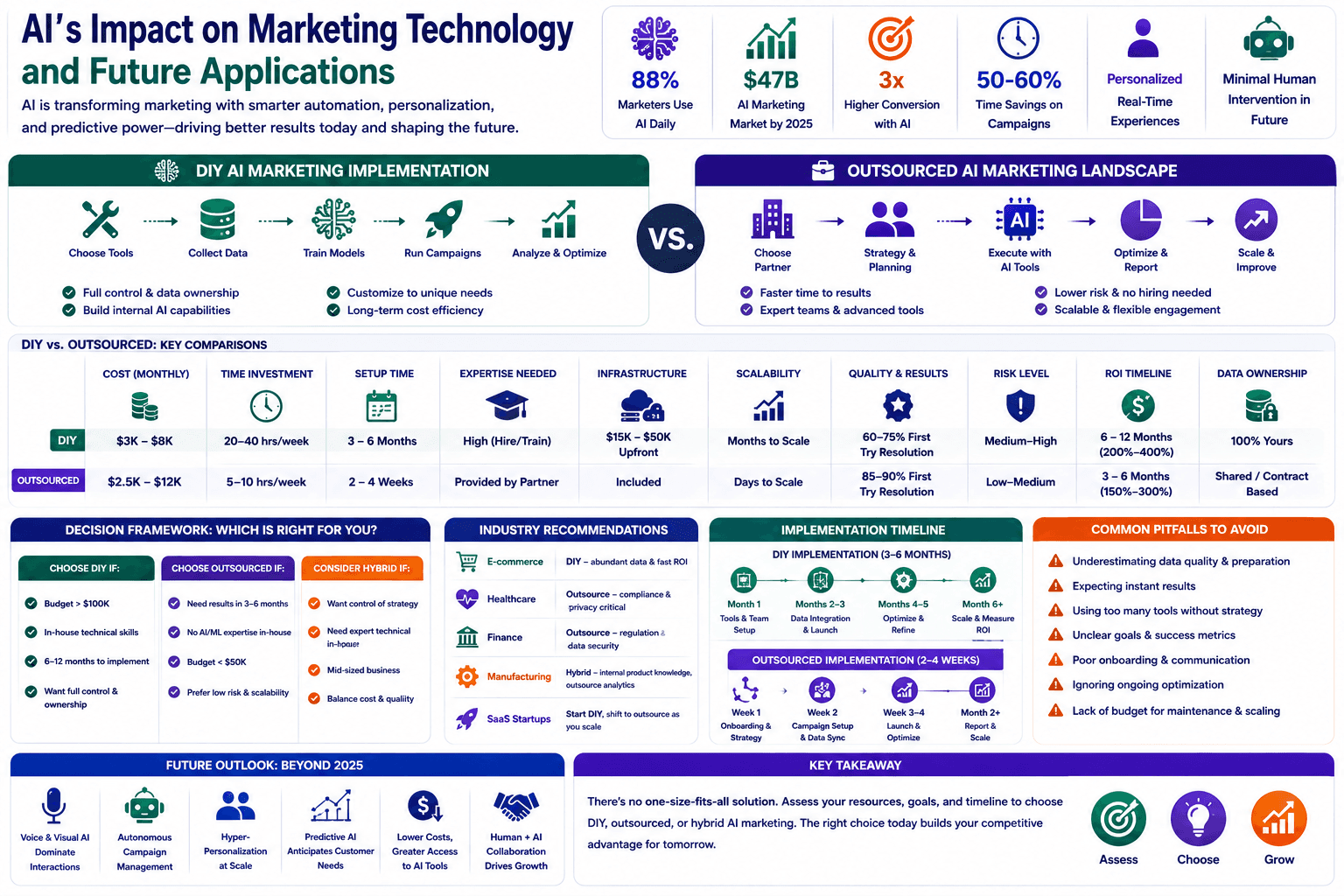
AI marketing companies have revolutionized how businesses create and distribute content. Through machine learning, marketers can now analyze customer behavior in real-time, enabling the rapid creation of personalized content. Natural language processing tools expedite the drafting process, while predictive analytics forecast content performance. This technological shift reduces content production time by 60% and enhances engagement by 40%. Regardless of size, marketing teams now have access to advanced capabilities, making sophisticated content strategies attainable across all industries. For more insights, check out our page on Core Components of AI-Driven Content Strategy.
The Current State of AI-Powered Content Strategy in 2026
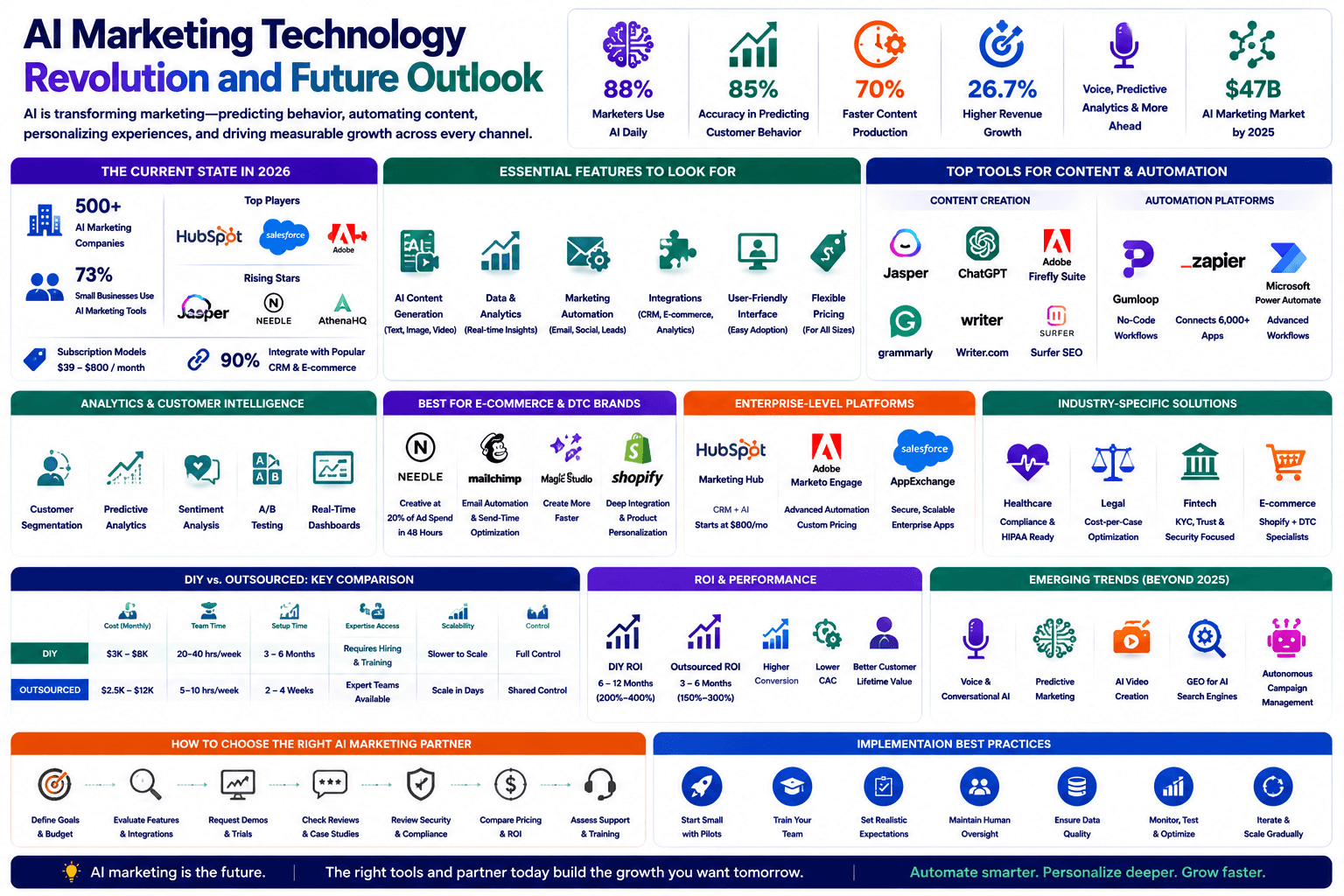
By 2026, 80% of creative professionals utilize AI tools daily for content creation. AI marketing companies offer comprehensive systems that manage research, creation, and distribution. Real-time optimization has become standard, with AI automatically enhancing content performance. Voice search and conversational AI now account for 45% of content discovery. Companies using AI-driven platforms publish three times more content while reducing costs by 35%, making this technology indispensable for competitive content marketing. Learn more about Future Trends in AI-Powered Content Strategy.
The Importance of Specialized AI Marketing Companies
Internal teams often lack the expertise and resources to effectively implement AI content strategies. Specialized AI marketing companies bring proven methodologies, advanced tools, and experts who understand both technology and marketing objectives. These companies provide access to leading AI platforms, regular updates, and strategic guidance that would be costly to develop in-house. They offer scalable solutions, reduce implementation time, and deliver measurable results through their expert knowledge and established processes. For a deeper understanding, visit our page on Choosing the Right AI Marketing Partner.
Core Components of AI-Driven Content Strategy
An AI-driven content strategy comprises four key elements: audience understanding through behavior analysis and predictions, automated content creation with language tools, instant message personalization, and performance enhancement through continuous testing. These components work in harmony to produce relevant and engaging content across various platforms, ensuring brand consistency and achieving business objectives. Explore more about Personalization and Predictive Analytics in Content Strategy.
Building Effective Partnerships with AI Marketing Companies
To collaborate effectively with AI marketing companies, communicate clearly about brand guidelines, content goals, and performance expectations. Establish clear procedures for content approval, quality checks, and feedback. Choose partners familiar with your industry who can seamlessly integrate with your existing marketing tools. Hold regular strategy meetings to align AI efforts with business goals. Set clear KPIs and maintain a collaborative relationship where human creativity guides AI efforts for optimal results. For best practices, refer to our guide on Implementation Timeline and Best Practices.
Essential AI Tools and Technologies for Content Creation
Modern AI marketing companies leverage key technologies to streamline content production. Tools like GPT-4 and Claude generate high-quality text, while machine learning algorithms analyze audience behavior. Computer vision AI creates and enhances images for diverse platforms. Predictive analytics tools forecast content success and recommend optimal publishing times. Integration platforms connect these AI tools with existing marketing systems, enabling seamless workflow automation and real-time performance tracking across all content channels. For more on this topic, check out our page on Cost Considerations and Budget Planning.
Building Your AI Content Workflow Framework
Develop effective AI content workflows by combining automation with human oversight. Start with AI-driven research and topic generation based on audience data. Use automated tools to create outlines and first drafts, ensuring human review for brand voice alignment and accuracy. Apply AI to enhance SEO and engagement. Automate content repurposing across different formats and channels. Conclude with performance tracking and feedback utilization to refine future content and strategies. For additional insights, see our article on Measuring ROI and Performance Metrics.
Personalization and Predictive Analytics in Content Strategy
AI marketing companies employ machine learning to analyze user behavior and predict content preferences. These systems segment audiences based on interactions, purchasing habits, and browsing patterns to deliver tailored content. Predictive analytics determine optimal publishing times, content formats, and messages that resonate with specific groups. Companies using AI for personalization achieve a 68% higher return on investment compared to traditional methods. Real-time data processing enables quick content adjustments, ensuring each user receives relevant messages that enhance conversion and engagement across all channels. For more information, visit our page on Multi-Channel Distribution Through AI Automation.
Multi-Channel Distribution Through AI Automation
AI marketing firms distribute content across multiple platforms while maintaining brand consistency. These systems schedule posts based on audience activity, resize content for various social media formats, and customize email campaigns using behavioral triggers. AI tools analyze performance data to allocate budgets wisely across channels like LinkedIn, Instagram, and email. Cross-channel coordination ensures unified messaging while adapting content tone to suit each platform's audience and engagement style. To learn more about measuring success, check our section on Challenges When Working with AI Marketing Companies.
Measuring ROI and Performance Metrics
AI marketing companies provide analytics dashboards to monitor content performance across channels. Key metrics include leads influenced by content, improvements in customer acquisition costs, and engagement quality scores. Predictive analytics forecast which content will enhance customer lifetime value. Real-time tracking allows for swift adjustments to improve underperforming content. AI attribution modeling enhances ROI calculation accuracy by linking content interactions to actual conversions and revenue. For further details, refer to our article on The Importance of Specialized AI Marketing Companies.
Challenges When Working with AI Marketing Companies
Maintaining brand voice consistency is a significant challenge when AI marketing companies produce large volumes of content. Automated workflows complicate quality control, necessitating robust review processes. Integrating existing marketing tools with new AI platforms can lead to data integration issues. As AI usage increases, costs may exceed initial estimates, highlighting the need for transparency. Training teams to effectively use AI tools requires time. Ensuring compliance and accuracy becomes more challenging with increased content and automated distribution across numerous channels. For strategies to overcome these challenges, see our page on Building Effective Partnerships with AI Marketing Companies.
Choosing the Right AI Marketing Partner
Select AI marketing companies based on their technology, industry experience, and compatibility with your existing tools. Evaluate their content standards, brand voice training, and compliance protocols. Seek partners with transparent pricing, dedicated account managers, and proven ROI. Ensure they can scale with your business and continuously improve. Request case studies from similar companies and assess their content quality before committing to a long-term partnership. For more insights, visit our article on Future Trends in AI-Powered Content Strategy.
Future Trends in AI-Powered Content Strategy
Voice-first content will become crucial as conversational AI advances. Real-time content adjustments based on user sentiment and micro-interactions will replace static personalization. AI marketing firms are developing self-improving content systems. Content tailored to local cultures will expand globally. Advanced analytics will predict content success months in advance, allowing for early strategic adjustments. Managing content across platforms will ensure seamless brand experiences in emerging digital spaces and virtual environments. For a comprehensive overview, check out our page on The Current State of AI-Powered Content Strategy in 2026.
Implementation Timeline and Best Practices
Begin with a 30-day assessment phase to evaluate current content processes and identify AI integration opportunities. In weeks 2-4, select AI marketing companies and establish brand guidelines. In month 2, conduct pilot tests with limited content types and train team members. In month 3, expand to full workflow implementation across all channels. Conduct weekly performance reviews and make monthly strategy adjustments. Ensure human oversight for quality control and brand consistency throughout the process. For more details, see our guide on Essential AI Tools and Technologies for Content Creation.
Cost Considerations and Budget Planning
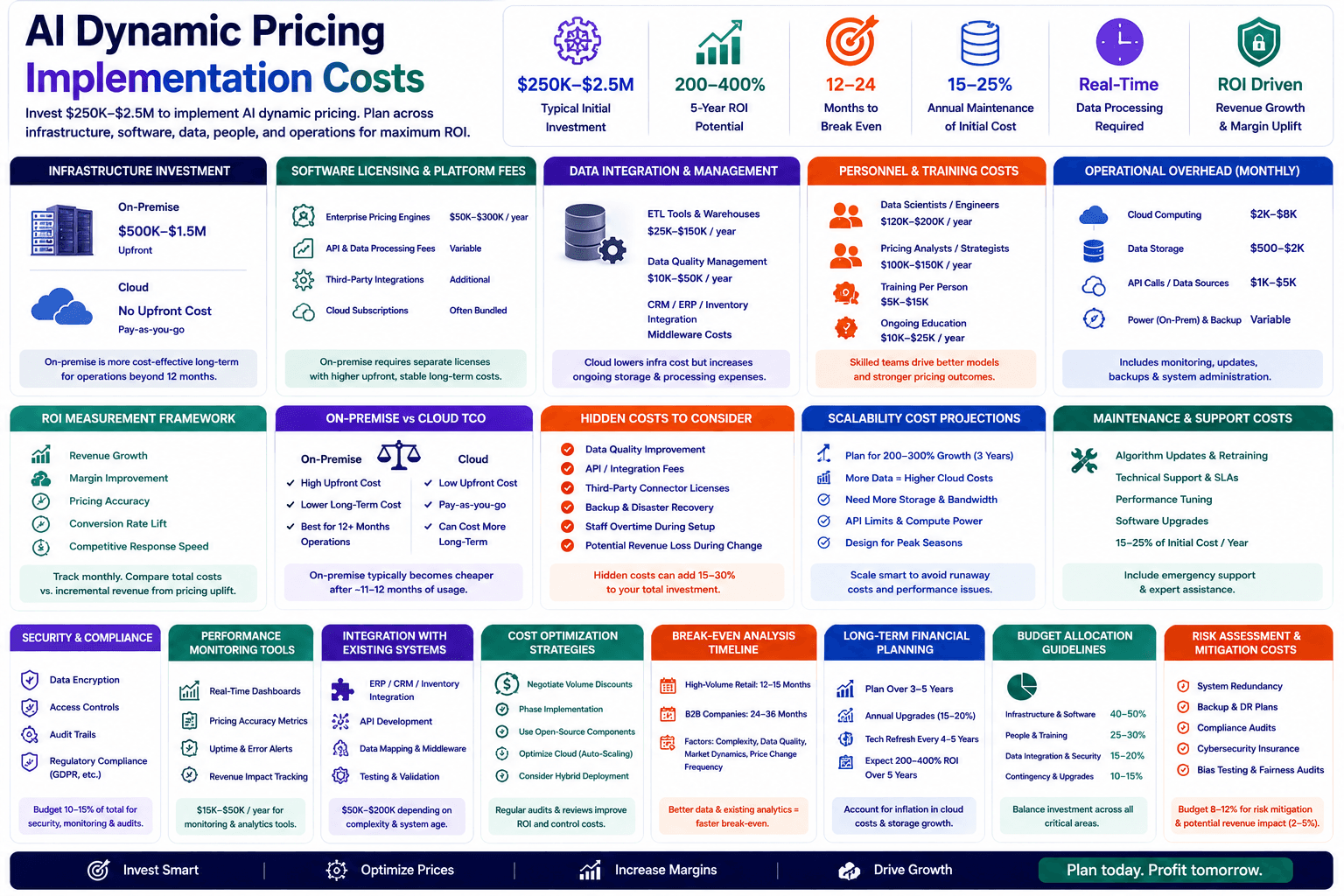
AI marketing companies typically charge between $5,000 and $50,000 per month, depending on project scope and complexity. Include costs for platform licenses, training, and integration. Many businesses experience a 15-20% increase in ROI within six months. Plan for expenses related to content creation tools, analytics platforms, and staff training. Consider starting with smaller projects to demonstrate value before increasing investment. Enterprise solutions may have higher upfront costs but offer better long-term efficiency and custom integrations. For additional insights, refer to our article on Building Your AI Content Workflow Framework.
Discover how AI marketing companies transform content strategy with 60% faster production and 40% better engagement. Expert guide to AI tools.
How AI Has Transformed Marketing Technology
AI marketing companies have revolutionized how businesses create and distribute content. Through machine learning, marketers can now analyze customer behavior in real-time, enabling the rapid creation of personalized content. Natural language processing tools expedite the drafting process, while predictive analytics forecast content performance. This technological shift reduces content production time by 60% and enhances engagement by 40%. Regardless of size, marketing teams now have access to advanced capabilities, making sophisticated content strategies attainable across all industries. For more insights, check out our page on Core Components of AI-Driven Content Strategy.
The Current State of AI-Powered Content Strategy in 2026
By 2026, 80% of creative professionals utilize AI tools daily for content creation. AI marketing companies offer comprehensive systems that manage research, creation, and distribution. Real-time optimization has become standard, with AI automatically enhancing content performance. Voice search and conversational AI now account for 45% of content discovery. Companies using AI-driven platforms publish three times more content while reducing costs by 35%, making this technology indispensable for competitive content marketing. Learn more about Future Trends in AI-Powered Content Strategy.
The Importance of Specialized AI Marketing Companies
Internal teams often lack the expertise and resources to effectively implement AI content strategies. Specialized AI marketing companies bring proven methodologies, advanced tools, and experts who understand both technology and marketing objectives. These companies provide access to leading AI platforms, regular updates, and strategic guidance that would be costly to develop in-house. They offer scalable solutions, reduce implementation time, and deliver measurable results through their expert knowledge and established processes. For a deeper understanding, visit our page on Choosing the Right AI Marketing Partner.
Core Components of AI-Driven Content Strategy
An AI-driven content strategy comprises four key elements: audience understanding through behavior analysis and predictions, automated content creation with language tools, instant message personalization, and performance enhancement through continuous testing. These components work in harmony to produce relevant and engaging content across various platforms, ensuring brand consistency and achieving business objectives. Explore more about Personalization and Predictive Analytics in Content Strategy.
Building Effective Partnerships with AI Marketing Companies
To collaborate effectively with AI marketing companies, communicate clearly about brand guidelines, content goals, and performance expectations. Establish clear procedures for content approval, quality checks, and feedback. Choose partners familiar with your industry who can seamlessly integrate with your existing marketing tools. Hold regular strategy meetings to align AI efforts with business goals. Set clear KPIs and maintain a collaborative relationship where human creativity guides AI efforts for optimal results. For best practices, refer to our guide on Implementation Timeline and Best Practices.
Essential AI Tools and Technologies for Content Creation
Modern AI marketing companies leverage key technologies to streamline content production. Tools like GPT-4 and Claude generate high-quality text, while machine learning algorithms analyze audience behavior. Computer vision AI creates and enhances images for diverse platforms. Predictive analytics tools forecast content success and recommend optimal publishing times. Integration platforms connect these AI tools with existing marketing systems, enabling seamless workflow automation and real-time performance tracking across all content channels. For more on this topic, check out our page on Cost Considerations and Budget Planning.
Building Your AI Content Workflow Framework
Develop effective AI content workflows by combining automation with human oversight. Start with AI-driven research and topic generation based on audience data. Use automated tools to create outlines and first drafts, ensuring human review for brand voice alignment and accuracy. Apply AI to enhance SEO and engagement. Automate content repurposing across different formats and channels. Conclude with performance tracking and feedback utilization to refine future content and strategies. For additional insights, see our article on Measuring ROI and Performance Metrics.
Personalization and Predictive Analytics in Content Strategy
AI marketing companies employ machine learning to analyze user behavior and predict content preferences. These systems segment audiences based on interactions, purchasing habits, and browsing patterns to deliver tailored content. Predictive analytics determine optimal publishing times, content formats, and messages that resonate with specific groups. Companies using AI for personalization achieve a 68% higher return on investment compared to traditional methods. Real-time data processing enables quick content adjustments, ensuring each user receives relevant messages that enhance conversion and engagement across all channels. For more information, visit our page on Multi-Channel Distribution Through AI Automation.
Multi-Channel Distribution Through AI Automation
AI marketing firms distribute content across multiple platforms while maintaining brand consistency. These systems schedule posts based on audience activity, resize content for various social media formats, and customize email campaigns using behavioral triggers. AI tools analyze performance data to allocate budgets wisely across channels like LinkedIn, Instagram, and email. Cross-channel coordination ensures unified messaging while adapting content tone to suit each platform's audience and engagement style. To learn more about measuring success, check our section on Challenges When Working with AI Marketing Companies.
Measuring ROI and Performance Metrics
AI marketing companies provide analytics dashboards to monitor content performance across channels. Key metrics include leads influenced by content, improvements in customer acquisition costs, and engagement quality scores. Predictive analytics forecast which content will enhance customer lifetime value. Real-time tracking allows for swift adjustments to improve underperforming content. AI attribution modeling enhances ROI calculation accuracy by linking content interactions to actual conversions and revenue. For further details, refer to our article on The Importance of Specialized AI Marketing Companies.
Challenges When Working with AI Marketing Companies
Maintaining brand voice consistency is a significant challenge when AI marketing companies produce large volumes of content. Automated workflows complicate quality control, necessitating robust review processes. Integrating existing marketing tools with new AI platforms can lead to data integration issues. As AI usage increases, costs may exceed initial estimates, highlighting the need for transparency. Training teams to effectively use AI tools requires time. Ensuring compliance and accuracy becomes more challenging with increased content and automated distribution across numerous channels. For strategies to overcome these challenges, see our page on Building Effective Partnerships with AI Marketing Companies.
Choosing the Right AI Marketing Partner
Select AI marketing companies based on their technology, industry experience, and compatibility with your existing tools. Evaluate their content standards, brand voice training, and compliance protocols. Seek partners with transparent pricing, dedicated account managers, and proven ROI. Ensure they can scale with your business and continuously improve. Request case studies from similar companies and assess their content quality before committing to a long-term partnership. For more insights, visit our article on Future Trends in AI-Powered Content Strategy.
Future Trends in AI-Powered Content Strategy
Voice-first content will become crucial as conversational AI advances. Real-time content adjustments based on user sentiment and micro-interactions will replace static personalization. AI marketing firms are developing self-improving content systems. Content tailored to local cultures will expand globally. Advanced analytics will predict content success months in advance, allowing for early strategic adjustments. Managing content across platforms will ensure seamless brand experiences in emerging digital spaces and virtual environments. For a comprehensive overview, check out our page on The Current State of AI-Powered Content Strategy in 2026.
Implementation Timeline and Best Practices
Begin with a 30-day assessment phase to evaluate current content processes and identify AI integration opportunities. In weeks 2-4, select AI marketing companies and establish brand guidelines. In month 2, conduct pilot tests with limited content types and train team members. In month 3, expand to full workflow implementation across all channels. Conduct weekly performance reviews and make monthly strategy adjustments. Ensure human oversight for quality control and brand consistency throughout the process. For more details, see our guide on Essential AI Tools and Technologies for Content Creation.
Cost Considerations and Budget Planning
AI marketing companies typically charge between $5,000 and $50,000 per month, depending on project scope and complexity. Include costs for platform licenses, training, and integration. Many businesses experience a 15-20% increase in ROI within six months. Plan for expenses related to content creation tools, analytics platforms, and staff training. Consider starting with smaller projects to demonstrate value before increasing investment. Enterprise solutions may have higher upfront costs but offer better long-term efficiency and custom integrations. For additional insights, refer to our article on Building Your AI Content Workflow Framework.
Other Blogs
Other Blogs
Check our other project Blogs with useful insight and information for your businesses
Other Blogs
Other Blogs
Check our other project Blogs with useful insight and information for your businesses