
Our Three Step Process
May 22, 2026
Complete Guide to Online Digital Marketing Skills & Strategies for 2026
Our Three Step Process
May 22, 2026
Complete Guide to Online Digital Marketing Skills & Strategies for 2026
Master online digital marketing with AI-powered strategies, SEO, content marketing, analytics, and automation. Essential skills guide for 2026.
AI's Impact on Marketing Technology
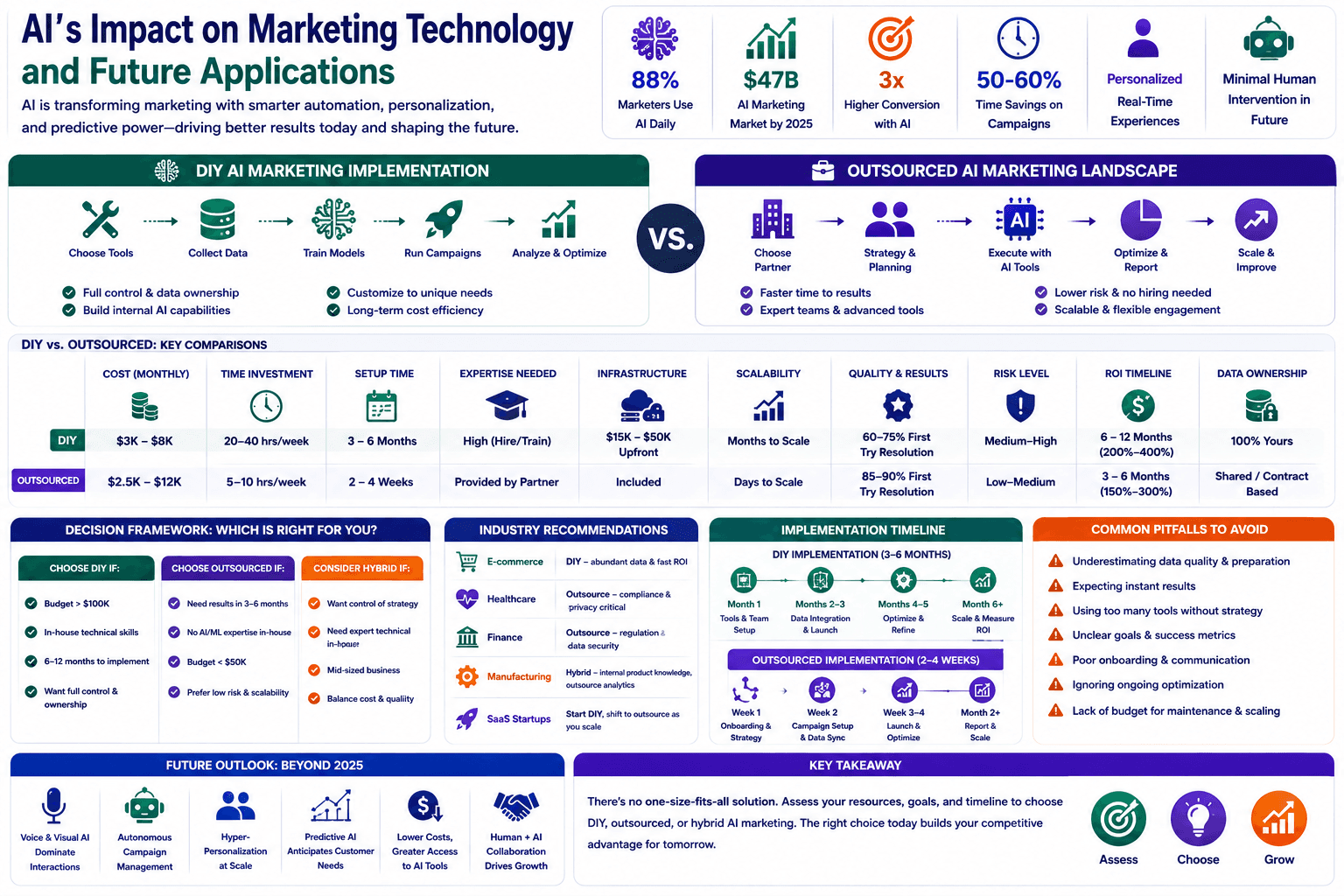
Artificial Intelligence (AI) is revolutionizing marketing technology by automating customer segmentation, personalizing content delivery, and predicting consumer behavior. Machine learning powers recommendation engines, chatbots enhance customer service, and predictive analytics refine campaign timing. Marketing platforms leverage AI to streamline lead nurturing, while programmatic advertising employs real-time bidding for precise audience targeting. For more on how AI is shaping the future, check out our article on The Future of AI-Driven Marketing Automation.
The Future of AI-Driven Marketing Automation
The future of marketing automation lies in personalizing experiences through predicting customer journeys and optimizing content in real-time. AI will autonomously manage campaigns, adjusting budgets, creative elements, and targeting based on performance data. Voice and visual search will become prevalent, with AI analyzing sentiment to boost customer engagement. Explore essential skills for marketers in our guide on Essential Digital Marketing Skills for 2026.
Essential Digital Marketing Skills for 2026
Marketers must harness AI tools, manage cross-platform campaigns, and interpret data effectively. Key skills include mapping customer journeys, designing automation workflows, and optimizing in real-time. Understanding privacy regulations, optimizing for voice search, and developing omnichannel strategies are crucial. Technical proficiency in marketing tech stacks and API integrations will distinguish successful professionals. Learn more about the role of AI in Content Marketing in the AI Era.
Content Marketing in the AI Era
AI is transforming content creation with tools that generate text, tailor content to individual users, and predict effective topics. Marketers should leverage AI for efficiency while relying on human creativity for authentic storytelling and a genuine brand voice. Future strategies will utilize AI to rapidly enhance content, personalize it, and adapt it across platforms, maintaining real connections with audiences. For insights on measuring success, see our article on Data Analytics and Performance Measurement.
Data Analytics and Performance Measurement
AI is reshaping marketing analytics by processing large datasets swiftly, uncovering patterns, and accurately predicting customer behavior. Marketers need proficiency in tools like Google Analytics 4, understanding attribution modeling, and interpreting AI-generated reports. Future analytics will provide instant optimization suggestions, automate A/B testing, and predict customer lifetime value, enabling data-driven decision-making. Discover how to enhance your strategies in Social Media Marketing Strategy Development.
Social Media Marketing Strategy Development
AI is transforming social media with tools for scheduling posts, sentiment analysis, and audience targeting. Marketers must understand platform dynamics, manage online communities, and collaborate with influencers. Future trends include AI-generated custom content, trend prediction, and automated crisis management. Key skills involve crafting cross-platform strategies, enhancing engagement, and integrating social commerce for optimal ROI. For more on optimizing your online presence, read about Search Engine Optimization and Search Marketing.
Search Engine Optimization and Search Marketing
SEO involves understanding user intent, enhancing technical elements, and planning content strategically. Essential skills include keyword research, on-page optimization, link building, and local SEO. Search marketing combines organic SEO with paid search efforts. AI tools assist in content optimization and competitor analysis. Future trends focus on optimizing for voice search, detecting AI-generated content, and enhancing personalization in search results. Learn how to effectively engage customers through Email Marketing and Customer Relationship Management.
Email Marketing and Customer Relationship Management
Email marketing remains a powerful tool for engagement and conversion, encompassing transactional emails, newsletters, and promotional campaigns. CRM integration enables personalized messaging based on customer actions. AI enhances segmentation and automates tasks. Future trends involve using predictive analytics for optimal send times and crafting highly personalized content to increase customer value. Explore the latest in Paid Advertising and Digital Campaign Management.
Paid Advertising and Digital Campaign Management
Paid advertising on platforms like Facebook and Google generates leads. Success requires clear offers, compelling copy, engaging visuals, and precise targeting. AI aids in bid management and audience optimization. Future trends include budget prediction and real-time creative content testing to enhance ROI across channels. For strategies on improving your conversion rates, check out our guide on Conversion Rate Optimization Techniques.
Conversion Rate Optimization Techniques
Conversion Rate Optimization involves testing to improve conversion rates. Set goals, analyze data, generate ideas, test variations, and evaluate outcomes. AI now supports A/B testing and personalizes user experiences. Soon, it will predict and adapt content in real-time based on user behavior. Enhance your marketing efforts with insights on User Experience Design for Marketers.
User Experience Design for Marketers
User experience design focuses on creating engaging websites and products. Emphasize user-centered design with clarity, consistency, and accessibility. Enhance performance and use engaging content to boost satisfaction. Responsive design ensures functionality across devices. AI personalizes user journeys, and predictive analytics anticipates user needs, adjusting interfaces for better conversion rates. For mobile strategies, see our article on Mobile Marketing and Responsive Design.
Mobile Marketing and Responsive Design
Mobile marketing targets users on smartphones and tablets through SMS, app marketing, and mobile ads. Responsive design ensures websites adapt to various screen sizes, enhancing user experience and SEO. Prioritize mobile-friendly content, fast loading times, and intuitive touch navigation. AI enhances mobile personalization with location-based targeting and behavior analysis for improved engagement. Understand the nuances of International Marketing and Cross-Cultural Strategies.
International Marketing and Cross-Cultural Strategies
International marketing requires understanding cultural differences, local consumer habits, and regional regulations. Thoroughly research target markets, tailor messaging to be culturally sensitive, and consider local payment options and languages. Utilize geo-targeting in digital ads, comply with international data laws like GDPR, and develop market entry strategies that respect local customs and business practices. Build a strong Brand Identity and Positioning in Digital Spaces to resonate with diverse audiences.
Brand Identity and Positioning in Digital Spaces
Brand identity encompasses the visual, tonal, and value-driven elements that differentiate your business online. Maintain consistent brand guidelines across all digital platforms. Design clear logos and color schemes. Craft unique positioning statements and employ emotional branding. Ensure consistency on social media and regularly audit your digital presence to maintain a cohesive brand image. Stay informed about Legal and Ethical Considerations in Digital Marketing.
Legal and Ethical Considerations in Digital Marketing
Digital marketers must adhere to key regulations like GDPR, data privacy laws, and consumer protection standards. Understanding intellectual property rights, trademark usage, and copyright laws helps avoid legal issues. Ethical marketing fosters trust through transparent advertising, honest claims, and responsible data usage. Stay informed about evolving privacy regulations across different regions. For those looking to advance their careers, explore Building Your Digital Marketing Career Path.
Building Your Digital Marketing Career Path
Digital marketing offers diverse career paths, from specialist roles to strategic positions. Start with foundational skills in analytics, content creation, and campaign management. Progress to roles like SEO specialist, social media manager, or PPC expert. Senior positions include marketing director, growth hacker, or digital strategy consultant. Freelancing provides flexible income and varied client experiences. Enhance your skills with Recommended Online Learning Platforms and Resources.
Recommended Online Learning Platforms and Resources
Coursera offers university-level digital marketing courses. Udemy provides practical skills training. LinkedIn Learning supports professional development. Google Digital Garage offers free certifications. HubSpot Academy covers inbound marketing. Skillshare focuses on creative marketing skills. edX provides programs from top institutions. Consider pursuing Certification Programs Worth Pursuing to further validate your expertise.
Certification Programs Worth Pursuing
Google Ads and Analytics certifications set industry standards. HubSpot Content Marketing and Inbound certifications enhance credibility. Facebook Blueprint demonstrates social media expertise. Hootsuite Social Media Marketing certification validates platform skills. Adobe Certified Expert programs focus on creative tools. Salesforce Marketing Cloud certifications enhance CRM skills. These credentials boost career prospects and earning potential. Utilize Practical Tools and Software for Marketing Professionals to implement your learning effectively.
Practical Tools and Software for Marketing Professionals
Google Analytics tracks website performance and user behavior. Canva simplifies graphic design for social media. Hootsuite manages multiple social platforms. SEMrush offers SEO and competitor analysis. Mailchimp handles email marketing. WordPress manages content systems. HubSpot provides marketing automation. These tools streamline tasks and enhance campaign results across digital channels. Start your journey by Creating Your Personal Learning Roadmap.
Creating Your Personal Learning Roadmap
Begin by assessing your current skills and identifying gaps. Set clear goals with timelines. Choose learning platforms that fit your schedule and budget. Focus on one skill area at a time. Practice with real projects as you learn. Track your progress monthly and adjust your plan as needed. Join online communities for support and networking.
Master online digital marketing with AI-powered strategies, SEO, content marketing, analytics, and automation. Essential skills guide for 2026.
AI's Impact on Marketing Technology
Artificial Intelligence (AI) is revolutionizing marketing technology by automating customer segmentation, personalizing content delivery, and predicting consumer behavior. Machine learning powers recommendation engines, chatbots enhance customer service, and predictive analytics refine campaign timing. Marketing platforms leverage AI to streamline lead nurturing, while programmatic advertising employs real-time bidding for precise audience targeting. For more on how AI is shaping the future, check out our article on The Future of AI-Driven Marketing Automation.
The Future of AI-Driven Marketing Automation
The future of marketing automation lies in personalizing experiences through predicting customer journeys and optimizing content in real-time. AI will autonomously manage campaigns, adjusting budgets, creative elements, and targeting based on performance data. Voice and visual search will become prevalent, with AI analyzing sentiment to boost customer engagement. Explore essential skills for marketers in our guide on Essential Digital Marketing Skills for 2026.
Essential Digital Marketing Skills for 2026
Marketers must harness AI tools, manage cross-platform campaigns, and interpret data effectively. Key skills include mapping customer journeys, designing automation workflows, and optimizing in real-time. Understanding privacy regulations, optimizing for voice search, and developing omnichannel strategies are crucial. Technical proficiency in marketing tech stacks and API integrations will distinguish successful professionals. Learn more about the role of AI in Content Marketing in the AI Era.
Content Marketing in the AI Era
AI is transforming content creation with tools that generate text, tailor content to individual users, and predict effective topics. Marketers should leverage AI for efficiency while relying on human creativity for authentic storytelling and a genuine brand voice. Future strategies will utilize AI to rapidly enhance content, personalize it, and adapt it across platforms, maintaining real connections with audiences. For insights on measuring success, see our article on Data Analytics and Performance Measurement.
Data Analytics and Performance Measurement
AI is reshaping marketing analytics by processing large datasets swiftly, uncovering patterns, and accurately predicting customer behavior. Marketers need proficiency in tools like Google Analytics 4, understanding attribution modeling, and interpreting AI-generated reports. Future analytics will provide instant optimization suggestions, automate A/B testing, and predict customer lifetime value, enabling data-driven decision-making. Discover how to enhance your strategies in Social Media Marketing Strategy Development.
Social Media Marketing Strategy Development
AI is transforming social media with tools for scheduling posts, sentiment analysis, and audience targeting. Marketers must understand platform dynamics, manage online communities, and collaborate with influencers. Future trends include AI-generated custom content, trend prediction, and automated crisis management. Key skills involve crafting cross-platform strategies, enhancing engagement, and integrating social commerce for optimal ROI. For more on optimizing your online presence, read about Search Engine Optimization and Search Marketing.
Search Engine Optimization and Search Marketing
SEO involves understanding user intent, enhancing technical elements, and planning content strategically. Essential skills include keyword research, on-page optimization, link building, and local SEO. Search marketing combines organic SEO with paid search efforts. AI tools assist in content optimization and competitor analysis. Future trends focus on optimizing for voice search, detecting AI-generated content, and enhancing personalization in search results. Learn how to effectively engage customers through Email Marketing and Customer Relationship Management.
Email Marketing and Customer Relationship Management
Email marketing remains a powerful tool for engagement and conversion, encompassing transactional emails, newsletters, and promotional campaigns. CRM integration enables personalized messaging based on customer actions. AI enhances segmentation and automates tasks. Future trends involve using predictive analytics for optimal send times and crafting highly personalized content to increase customer value. Explore the latest in Paid Advertising and Digital Campaign Management.
Paid Advertising and Digital Campaign Management
Paid advertising on platforms like Facebook and Google generates leads. Success requires clear offers, compelling copy, engaging visuals, and precise targeting. AI aids in bid management and audience optimization. Future trends include budget prediction and real-time creative content testing to enhance ROI across channels. For strategies on improving your conversion rates, check out our guide on Conversion Rate Optimization Techniques.
Conversion Rate Optimization Techniques
Conversion Rate Optimization involves testing to improve conversion rates. Set goals, analyze data, generate ideas, test variations, and evaluate outcomes. AI now supports A/B testing and personalizes user experiences. Soon, it will predict and adapt content in real-time based on user behavior. Enhance your marketing efforts with insights on User Experience Design for Marketers.
User Experience Design for Marketers
User experience design focuses on creating engaging websites and products. Emphasize user-centered design with clarity, consistency, and accessibility. Enhance performance and use engaging content to boost satisfaction. Responsive design ensures functionality across devices. AI personalizes user journeys, and predictive analytics anticipates user needs, adjusting interfaces for better conversion rates. For mobile strategies, see our article on Mobile Marketing and Responsive Design.
Mobile Marketing and Responsive Design
Mobile marketing targets users on smartphones and tablets through SMS, app marketing, and mobile ads. Responsive design ensures websites adapt to various screen sizes, enhancing user experience and SEO. Prioritize mobile-friendly content, fast loading times, and intuitive touch navigation. AI enhances mobile personalization with location-based targeting and behavior analysis for improved engagement. Understand the nuances of International Marketing and Cross-Cultural Strategies.
International Marketing and Cross-Cultural Strategies
International marketing requires understanding cultural differences, local consumer habits, and regional regulations. Thoroughly research target markets, tailor messaging to be culturally sensitive, and consider local payment options and languages. Utilize geo-targeting in digital ads, comply with international data laws like GDPR, and develop market entry strategies that respect local customs and business practices. Build a strong Brand Identity and Positioning in Digital Spaces to resonate with diverse audiences.
Brand Identity and Positioning in Digital Spaces
Brand identity encompasses the visual, tonal, and value-driven elements that differentiate your business online. Maintain consistent brand guidelines across all digital platforms. Design clear logos and color schemes. Craft unique positioning statements and employ emotional branding. Ensure consistency on social media and regularly audit your digital presence to maintain a cohesive brand image. Stay informed about Legal and Ethical Considerations in Digital Marketing.
Legal and Ethical Considerations in Digital Marketing
Digital marketers must adhere to key regulations like GDPR, data privacy laws, and consumer protection standards. Understanding intellectual property rights, trademark usage, and copyright laws helps avoid legal issues. Ethical marketing fosters trust through transparent advertising, honest claims, and responsible data usage. Stay informed about evolving privacy regulations across different regions. For those looking to advance their careers, explore Building Your Digital Marketing Career Path.
Building Your Digital Marketing Career Path
Digital marketing offers diverse career paths, from specialist roles to strategic positions. Start with foundational skills in analytics, content creation, and campaign management. Progress to roles like SEO specialist, social media manager, or PPC expert. Senior positions include marketing director, growth hacker, or digital strategy consultant. Freelancing provides flexible income and varied client experiences. Enhance your skills with Recommended Online Learning Platforms and Resources.
Recommended Online Learning Platforms and Resources
Coursera offers university-level digital marketing courses. Udemy provides practical skills training. LinkedIn Learning supports professional development. Google Digital Garage offers free certifications. HubSpot Academy covers inbound marketing. Skillshare focuses on creative marketing skills. edX provides programs from top institutions. Consider pursuing Certification Programs Worth Pursuing to further validate your expertise.
Certification Programs Worth Pursuing
Google Ads and Analytics certifications set industry standards. HubSpot Content Marketing and Inbound certifications enhance credibility. Facebook Blueprint demonstrates social media expertise. Hootsuite Social Media Marketing certification validates platform skills. Adobe Certified Expert programs focus on creative tools. Salesforce Marketing Cloud certifications enhance CRM skills. These credentials boost career prospects and earning potential. Utilize Practical Tools and Software for Marketing Professionals to implement your learning effectively.
Practical Tools and Software for Marketing Professionals
Google Analytics tracks website performance and user behavior. Canva simplifies graphic design for social media. Hootsuite manages multiple social platforms. SEMrush offers SEO and competitor analysis. Mailchimp handles email marketing. WordPress manages content systems. HubSpot provides marketing automation. These tools streamline tasks and enhance campaign results across digital channels. Start your journey by Creating Your Personal Learning Roadmap.
Creating Your Personal Learning Roadmap
Begin by assessing your current skills and identifying gaps. Set clear goals with timelines. Choose learning platforms that fit your schedule and budget. Focus on one skill area at a time. Practice with real projects as you learn. Track your progress monthly and adjust your plan as needed. Join online communities for support and networking.
Other Blogs
Other Blogs
Check our other project Blogs with useful insight and information for your businesses
Other Blogs
Other Blogs
Check our other project Blogs with useful insight and information for your businesses