
Our Three Step Process
May 21, 2026
Online Digital Marketing: In-House vs Outsourcing Guide 2026 | HireGrowth
Our Three Step Process
May 21, 2026
Online Digital Marketing: In-House vs Outsourcing Guide 2026 | HireGrowth
Discover the best online digital marketing approach for 2026. Compare in-house teams vs outsourcing costs, benefits, and strategies.
AI's Impact on Marketing Technology and Future Applications
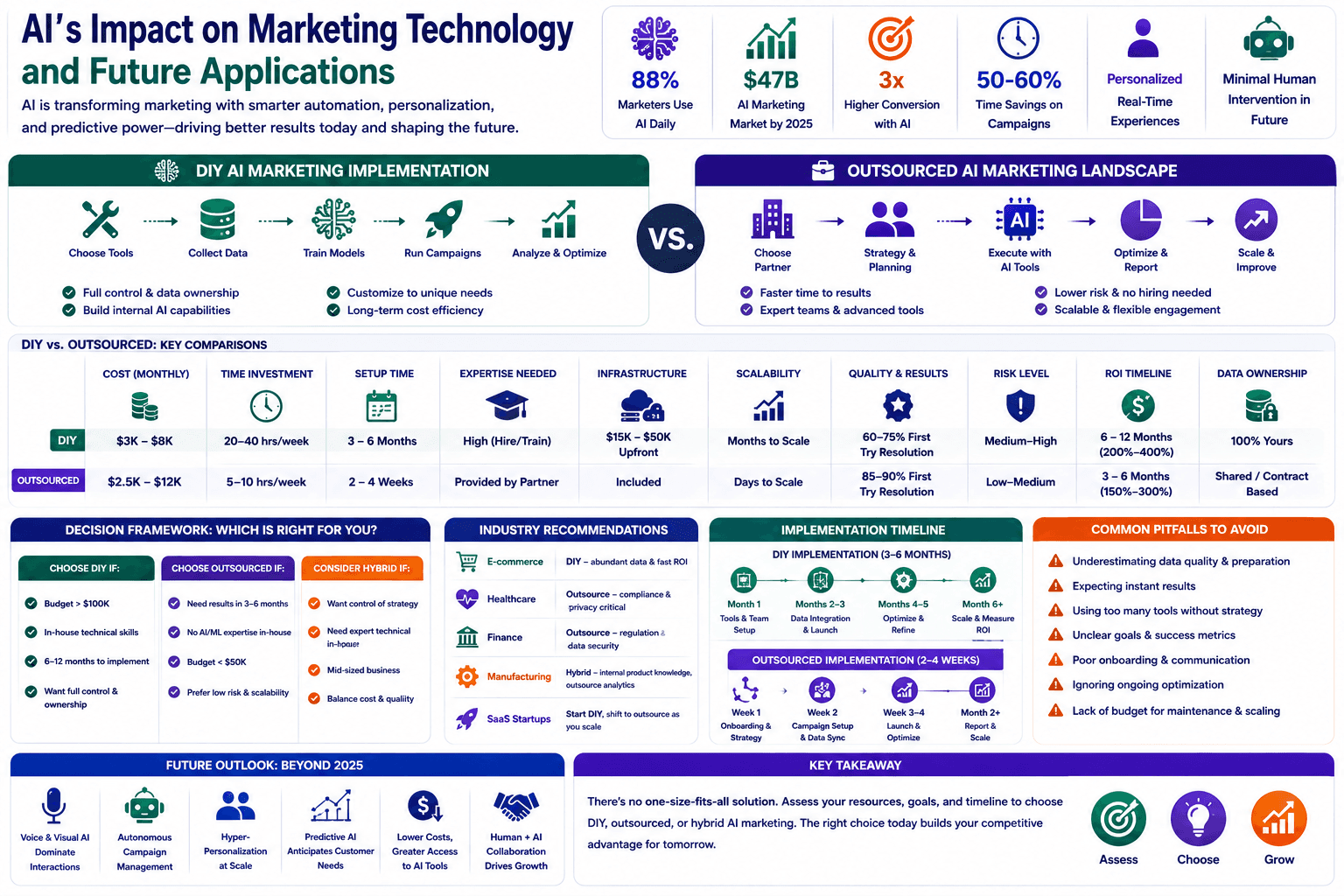
AI is revolutionizing digital marketing by offering predictive insights and personalized customer experiences beyond basic automation. Machine learning optimizes ad spending in real-time, while AI tools enable large-scale personalized email campaigns. Marketing teams leverage AI for customer segmentation, predicting customer value, and automating complex attribution across multiple channels. For more on how AI can enhance your strategy, check out our page on AI Tools for Marketing.
Looking ahead to 2027, AI will enable self-managing campaigns, making voice and visual search commonplace. AI will automatically generate and test numerous ad variations, influencing whether companies build in-house capabilities or outsource, given the specialized skills required for advanced AI tools. Learn more about the future of marketing in our article on Emerging Marketing Technologies.
Understanding Your Digital Marketing Options in 2026
Companies have three primary options for managing digital marketing: building an in-house team, outsourcing to agencies or freelancers, or adopting a hybrid model. Each choice offers distinct advantages depending on business size, budget, and growth stage. Startups often outsource due to budget constraints, while established companies may prefer the control of an in-house team. The key is aligning the choice with your business needs and long-term goals. For a deeper dive into the pros and cons of each model, visit our Digital Marketing Models page.
The Case for Building an In-House Digital Marketing Team
An internal team provides full control over brand messaging and campaigns, with a deep understanding of company culture, values, and goals. This leads to authentic content and campaigns. In-house teams can quickly adapt to market changes, respond to customer feedback, and collaborate seamlessly with other departments. Investing in full-time employees also retains valuable knowledge within the company, offering a long-term competitive edge. Explore our insights on Building Effective Teams for more information.
When Outsourcing Makes Strategic Sense
Outsourcing is beneficial when expert skills are needed without the cost of full-time hires. Agencies provide expertise in SEO, paid ads, content creation, and analytics, offering small businesses and startups access to top-level tools and strategies. Outsourcing is ideal for rapid growth during peak times or product launches, allowing for increased marketing efforts without long hiring processes or permanent staff commitments. For tips on selecting the right agency, check out our guide on Choosing a Marketing Agency.
Cost Analysis: Building vs Outsourcing Breakdown
Building an in-house team requires significant initial investment. A digital marketing manager earns $60,000-$90,000 annually, with benefits adding 20-30%. Including SEO, paid ads, and content specialists, the total can reach $200,000-$400,000 yearly. Outsourcing costs range from $3,000-$15,000 monthly, depending on scope and agency size, with full services costing $8,000-$12,000 monthly. The break-even point is typically 18-24 months. Outsourcing provides immediate access to senior-level expertise, which is costlier to hire in-house. For a detailed breakdown of costs, see our Marketing Budgeting Guide.
The Hybrid Approach: Best of Both Worlds
The hybrid model combines in-house control with outsourced expertise for a balanced strategy. Core tasks like brand strategy and content planning remain internal, while specialized tasks like SEO and technical work are outsourced. This approach suits growing companies needing brand consistency but lacking technical skills. It offers flexibility and cost control, with many successful businesses hiring an internal marketing manager and partnering with agencies for specific campaigns or technical services. Discover more about hybrid strategies in our Hybrid Marketing Solutions article.
Key Factors to Consider Before Making Your Decision
Consider these key factors when deciding between building or outsourcing:
Budget: Evaluate both long-term costs and immediate needs.
Team Skills: Assess if your team lacks specific skills.
Timeline: Consider the speed of results needed.
Industry Understanding: Ensure partners understand your market.
Control Needs: Determine the level of control required.
Growth Stage: Align the choice with your company's maturity and resources.
For more insights on evaluating your options, visit our Decision-Making Framework.
Industry-Specific Considerations for Online Digital Marketing
Different industries require tailored approaches. Healthcare and financial services benefit from agencies familiar with compliance rules, while e-commerce gains from performance marketing skills. B2B companies often need in-house teams for deep product knowledge. Tech startups may outsource for quick access to the latest tools, while manufacturing companies might prefer in-house teams for product understanding. Retail brands often use a mix, keeping brand strategy internal and outsourcing technical tasks. For industry-specific strategies, check our Industry Insights.
Making the Switch: Transitioning Between Models
Transitioning between in-house and outsourced teams requires careful planning. Document processes, campaign data, and brand guidelines. Choose agencies that assist with transitions and allow a period of collaboration between teams. When building in-house after outsourcing, retain knowledge by hiring experienced individuals. Gradually shift tasks while keeping agencies for specialized roles. Set clear timelines, typically 60-90 days, and monitor performance indicators closely to ensure a smooth transition. For a comprehensive guide on transitions, see our Transition Strategies.
Measuring Success Regardless of Your Choice
Track revenue-driven KPIs like customer acquisition cost, lifetime value, and return on ad spend. Set up monthly reviews to compare results with goals, focusing on campaign responsiveness, creative quality, and strategy alignment. Use tools like Google Analytics 4, HubSpot, or custom dashboards for performance monitoring. Document lessons learned and opportunities for improvement quarterly. Consistent reporting standards, clear attribution models, and data-driven strategy adjustments are crucial for success. For more on measuring success, visit our Performance Metrics page.
Future-Proofing Your Digital Marketing Strategy
By 2027, AI-driven marketing automation will transform team operations. Ensure your strategy adapts to new technologies like advanced personalization, predictive analytics, and automated content creation. Build flexibility into contracts with agencies or hire team members eager to learn. Choose platforms compatible with emerging tools and maintain control over your data. Consider the impact of voice search, augmented reality shopping, and blockchain-based customer checks on your marketing. Successful businesses will seamlessly switch between approaches while maintaining strong brand messaging and customer experience across all channels. For future trends, explore our Future of Marketing insights.
Discover the best online digital marketing approach for 2026. Compare in-house teams vs outsourcing costs, benefits, and strategies.
AI's Impact on Marketing Technology and Future Applications
AI is revolutionizing digital marketing by offering predictive insights and personalized customer experiences beyond basic automation. Machine learning optimizes ad spending in real-time, while AI tools enable large-scale personalized email campaigns. Marketing teams leverage AI for customer segmentation, predicting customer value, and automating complex attribution across multiple channels. For more on how AI can enhance your strategy, check out our page on AI Tools for Marketing.
Looking ahead to 2027, AI will enable self-managing campaigns, making voice and visual search commonplace. AI will automatically generate and test numerous ad variations, influencing whether companies build in-house capabilities or outsource, given the specialized skills required for advanced AI tools. Learn more about the future of marketing in our article on Emerging Marketing Technologies.
Understanding Your Digital Marketing Options in 2026
Companies have three primary options for managing digital marketing: building an in-house team, outsourcing to agencies or freelancers, or adopting a hybrid model. Each choice offers distinct advantages depending on business size, budget, and growth stage. Startups often outsource due to budget constraints, while established companies may prefer the control of an in-house team. The key is aligning the choice with your business needs and long-term goals. For a deeper dive into the pros and cons of each model, visit our Digital Marketing Models page.
The Case for Building an In-House Digital Marketing Team
An internal team provides full control over brand messaging and campaigns, with a deep understanding of company culture, values, and goals. This leads to authentic content and campaigns. In-house teams can quickly adapt to market changes, respond to customer feedback, and collaborate seamlessly with other departments. Investing in full-time employees also retains valuable knowledge within the company, offering a long-term competitive edge. Explore our insights on Building Effective Teams for more information.
When Outsourcing Makes Strategic Sense
Outsourcing is beneficial when expert skills are needed without the cost of full-time hires. Agencies provide expertise in SEO, paid ads, content creation, and analytics, offering small businesses and startups access to top-level tools and strategies. Outsourcing is ideal for rapid growth during peak times or product launches, allowing for increased marketing efforts without long hiring processes or permanent staff commitments. For tips on selecting the right agency, check out our guide on Choosing a Marketing Agency.
Cost Analysis: Building vs Outsourcing Breakdown
Building an in-house team requires significant initial investment. A digital marketing manager earns $60,000-$90,000 annually, with benefits adding 20-30%. Including SEO, paid ads, and content specialists, the total can reach $200,000-$400,000 yearly. Outsourcing costs range from $3,000-$15,000 monthly, depending on scope and agency size, with full services costing $8,000-$12,000 monthly. The break-even point is typically 18-24 months. Outsourcing provides immediate access to senior-level expertise, which is costlier to hire in-house. For a detailed breakdown of costs, see our Marketing Budgeting Guide.
The Hybrid Approach: Best of Both Worlds
The hybrid model combines in-house control with outsourced expertise for a balanced strategy. Core tasks like brand strategy and content planning remain internal, while specialized tasks like SEO and technical work are outsourced. This approach suits growing companies needing brand consistency but lacking technical skills. It offers flexibility and cost control, with many successful businesses hiring an internal marketing manager and partnering with agencies for specific campaigns or technical services. Discover more about hybrid strategies in our Hybrid Marketing Solutions article.
Key Factors to Consider Before Making Your Decision
Consider these key factors when deciding between building or outsourcing:
Budget: Evaluate both long-term costs and immediate needs.
Team Skills: Assess if your team lacks specific skills.
Timeline: Consider the speed of results needed.
Industry Understanding: Ensure partners understand your market.
Control Needs: Determine the level of control required.
Growth Stage: Align the choice with your company's maturity and resources.
For more insights on evaluating your options, visit our Decision-Making Framework.
Industry-Specific Considerations for Online Digital Marketing
Different industries require tailored approaches. Healthcare and financial services benefit from agencies familiar with compliance rules, while e-commerce gains from performance marketing skills. B2B companies often need in-house teams for deep product knowledge. Tech startups may outsource for quick access to the latest tools, while manufacturing companies might prefer in-house teams for product understanding. Retail brands often use a mix, keeping brand strategy internal and outsourcing technical tasks. For industry-specific strategies, check our Industry Insights.
Making the Switch: Transitioning Between Models
Transitioning between in-house and outsourced teams requires careful planning. Document processes, campaign data, and brand guidelines. Choose agencies that assist with transitions and allow a period of collaboration between teams. When building in-house after outsourcing, retain knowledge by hiring experienced individuals. Gradually shift tasks while keeping agencies for specialized roles. Set clear timelines, typically 60-90 days, and monitor performance indicators closely to ensure a smooth transition. For a comprehensive guide on transitions, see our Transition Strategies.
Measuring Success Regardless of Your Choice
Track revenue-driven KPIs like customer acquisition cost, lifetime value, and return on ad spend. Set up monthly reviews to compare results with goals, focusing on campaign responsiveness, creative quality, and strategy alignment. Use tools like Google Analytics 4, HubSpot, or custom dashboards for performance monitoring. Document lessons learned and opportunities for improvement quarterly. Consistent reporting standards, clear attribution models, and data-driven strategy adjustments are crucial for success. For more on measuring success, visit our Performance Metrics page.
Future-Proofing Your Digital Marketing Strategy
By 2027, AI-driven marketing automation will transform team operations. Ensure your strategy adapts to new technologies like advanced personalization, predictive analytics, and automated content creation. Build flexibility into contracts with agencies or hire team members eager to learn. Choose platforms compatible with emerging tools and maintain control over your data. Consider the impact of voice search, augmented reality shopping, and blockchain-based customer checks on your marketing. Successful businesses will seamlessly switch between approaches while maintaining strong brand messaging and customer experience across all channels. For future trends, explore our Future of Marketing insights.
Other Blogs
Other Blogs
Check our other project Blogs with useful insight and information for your businesses
Other Blogs
Other Blogs
Check our other project Blogs with useful insight and information for your businesses