
Our Three Step Process
22 พฤษภาคม 2569
AI Agentic Digital Marketing: Complete Guide for 2026 | HireGrowth
Our Three Step Process
22 พฤษภาคม 2569
AI Agentic Digital Marketing: Complete Guide for 2026 | HireGrowth
Master AI agentic digital marketing in 2026. Learn implementation strategies, vendor selection, and best practices for autonomous marketing.
AI's Impact on Marketing Technology Evolution
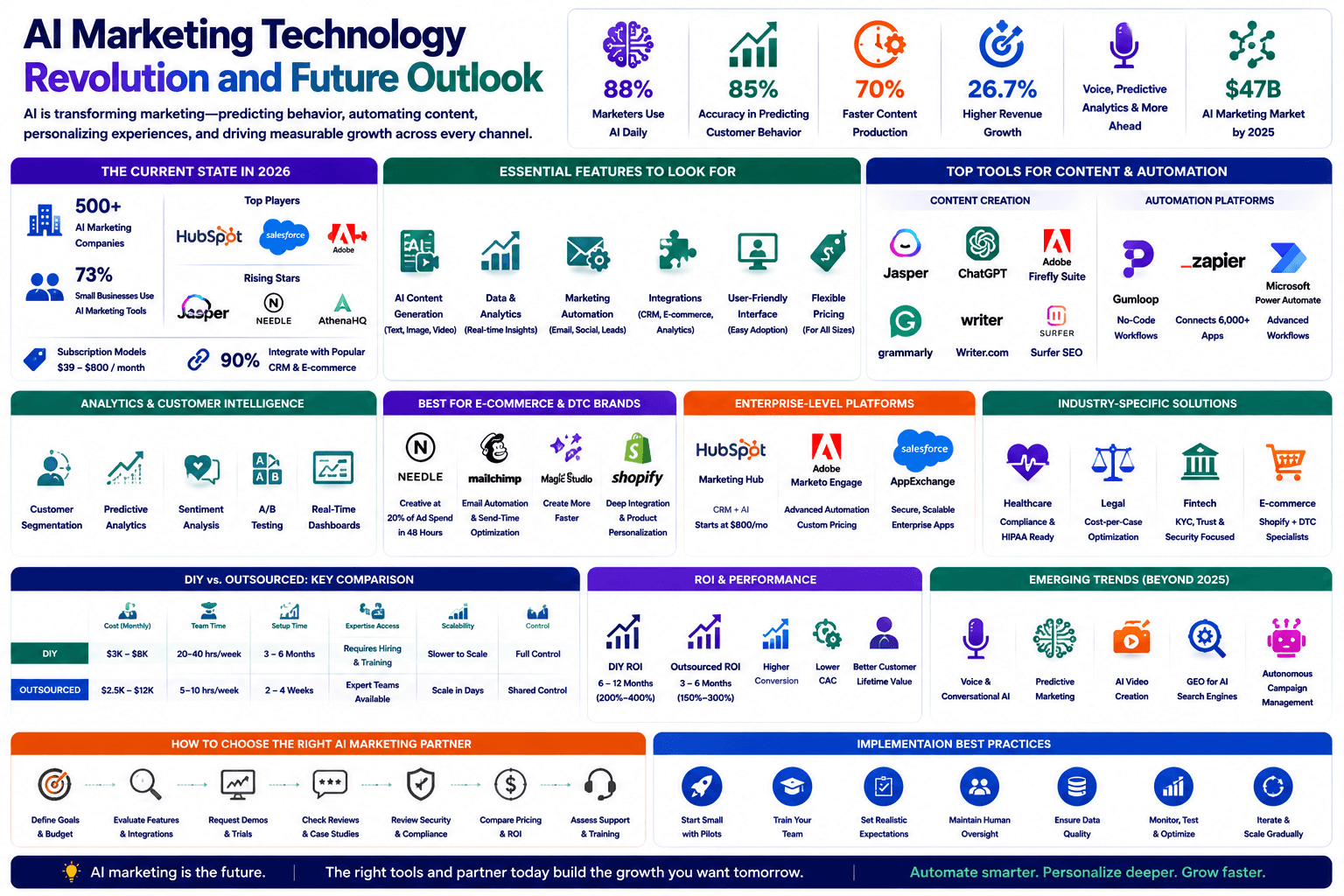
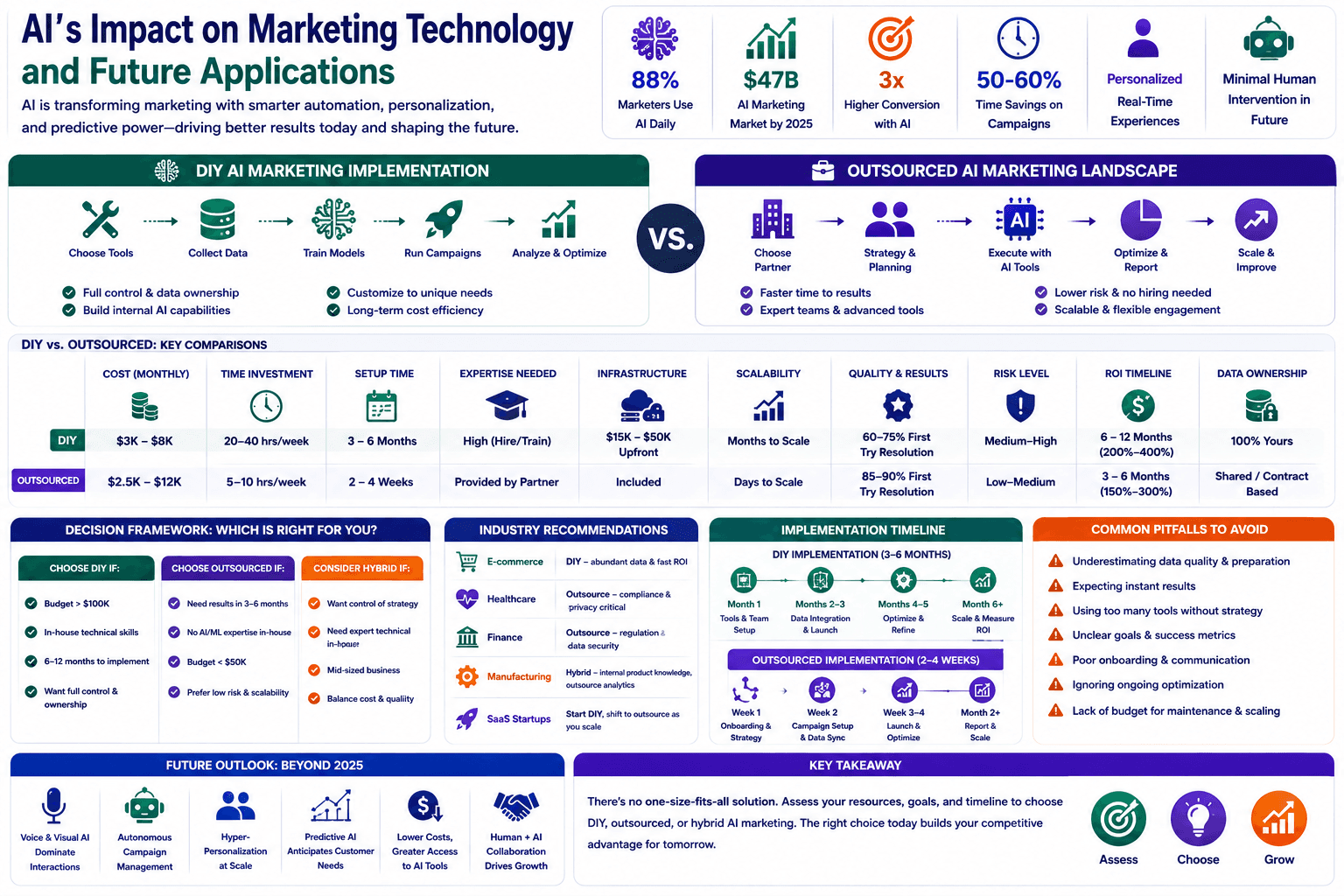
AI has revolutionized marketing technology, transforming it from reactive tools into proactive systems that predict customer needs and automate tasks. Traditional marketing tools required manual rules and constant human oversight. Today, AI analyzes customer behavior, forecasts purchasing trends, and executes personalized campaigns autonomously. For a deeper understanding of how AI is reshaping the landscape, check out our article on AI in Marketing.
Machine learning processes vast data sets to identify niche customer segments, adjust ad spending in real-time, and customize content delivery. Predictive tools enable marketers to accurately forecast customer value, churn probabilities, and optimal engagement times. Learn more about predictive analytics and its role in modern marketing.
The shift from rule-based systems to intelligent AI solutions has reduced manual campaign work by 60-70% and improved conversion rates by 25-40%. AI-driven models provide clearer ROI insights across customer journeys, facilitating data-driven budget decisions that were previously unattainable. Explore our guide on ROI in Marketing for more insights.
The Future of AI-Driven Marketing Automation
Marketing automation is evolving towards systems that independently manage the entire customer lifecycle. By 2028, AI will handle complex marketing tasks autonomously, from lead generation to customer retention. For more on the future of marketing automation, visit our page on Marketing Automation Trends.
Future AI will employ specialized agents that collaborate seamlessly. One agent might generate content, another determine the optimal timing for distribution, and a third manage budgets across channels. These agents will communicate and adapt strategies based on real-time data.
AI will advance from merely predicting outcomes to taking proactive actions. It won't just identify potential customer churn; it will initiate retention campaigns, adjust pricing, and modify product recommendations to retain customers. To understand how to implement these strategies, check our article on Customer Retention Strategies.
AI will integrate with emerging technologies like voice commerce, augmented reality, and IoT devices to create seamless customer experiences, predicting needs at every touchpoint and delivering timely messages through the most effective channels.
Understanding Agentic AI in Digital Marketing
Agentic AI refers to systems capable of autonomously managing marketing campaigns. Unlike conventional marketing tools that rely on preset rules, agentic AI makes decisions based on real-time data and continuous learning. For a comprehensive overview of AI technologies, see our AI Technologies Overview.
These systems possess four key capabilities that transform digital marketing:
Autonomous execution of complex marketing tasks
Strategic planning that dynamically adjusts campaigns based on data
Tool integration with CRM, email, social media, and analytics platforms
Self-optimization through learning from campaign outcomes
Agentic AI can execute tasks such as launching products across channels, managing campaign budgets, and personalizing customer experiences. It analyzes customer behavior, market trends, and competitor data to make informed decisions traditionally requiring marketing teams.
This technology shifts marketing from task management to strategic execution, allowing teams to focus on creativity while AI handles complex operations. For more on integrating AI into your strategy, visit our AI Integration Guide.
8 Key Criteria for Choosing Agentic AI Marketing Solutions
When selecting an agentic AI marketing platform, consider these eight critical factors to ensure compatibility with existing workflows and effectiveness:
Autonomous Decision-Making: Evaluate how the system operates independently, adjusting campaign budgets, halting underperforming ads, and initiating creative strategies based on performance data.
Multi-Channel Integration: Ensure the AI can manage campaigns across email, social media, search, and display ads simultaneously, maintaining message consistency while optimizing each channel's unique requirements.
Real-Time Personalization: Assess the platform's ability to instantly tailor content, timing, and offers for each user, including dynamic website content, personalized emails, and targeted social media actions.
Data Security and Compliance: Verify that customer information is secure and complies with regulations like GDPR and CCPA. Review encryption standards, data storage, and audit features before implementation. For more on compliance, see our Data Compliance Best Practices.
Platform Categories and Solution Types
The AI digital marketing landscape offers three primary platform types to meet diverse business needs:
Enterprise-Grade Platforms: Options like Salesforce Agentforce and Microsoft Copilot integrate seamlessly with CRM and ERP systems, automating tasks in sales, marketing, and customer service. Learn more about Enterprise Solutions.
Specialized Marketing Platforms: Solutions from companies like Kore.ai and Vstorm focus on campaign management and customer journey optimization, tailored to specific marketing needs. Explore our Specialized Marketing Tools.
Hybrid Solutions: Platforms like ServiceNow AI Agents and Workday Illuminate combine ready-made features with customizable options, offering pricing models that include both standard and bespoke workflows.
Each type caters to different company sizes, technical capabilities, and budgets. Evaluate your current marketing tools before selecting the appropriate platform.
Implementation Considerations and Best Practices
Implementing agentic AI in digital marketing requires careful planning and phased execution. Start with pilot projects in areas like lead scoring or email personalization. Upon success, expand to more complex tasks.
Data preparation is crucial, often consuming 30-40% of the budget. Ensure data is clean, well-organized, and all marketing data sources are connected and accessible.
Change management is vital as AI alters team roles. Train staff on new processes and establish clear guidelines for AI collaboration. For tips on managing change, see our Change Management Strategies.
Integration planning should ensure AI compatibility with existing marketing technology. Most solutions require API connections to systems like CRM, marketing automation, and analytics tools.
Governance frameworks must define AI decision-making limits, approval processes, and escalation protocols. Establish clear metrics and monitoring systems to evaluate AI effectiveness in marketing campaigns and customer interactions.
Vendor Selection Framework
Establish a structured method to evaluate agentic AI digital marketing vendors. Develop a scoring chart ranking each of the eight key criteria based on organizational priorities.
Request detailed demonstrations using your own marketing data and scenarios to test platform performance in areas like lead nurturing and campaign optimization.
Check vendor stability by reviewing financial health, customer retention, and future plans. Seek references from similar companies.
Assess technical compatibility with proof-of-concept projects, ensuring API capabilities, data integration, and security protocols align with your systems.
Compare total cost of ownership beyond licensing fees, including implementation, training, ongoing support, and potential infrastructure upgrades. For a breakdown of costs, visit our Cost Analysis Guide.
Review contract terms carefully, focusing on data ownership, termination clauses, and service level agreements. Negotiate trial periods to validate performance before full commitment.
Common Pitfalls to Avoid During Evaluation
Avoid these common pitfalls when evaluating agentic AI solutions:
Focusing only on features can lead to selecting the wrong vendor. Avoid being distracted by flashy AI tools that don't align with marketing goals.
Underestimating integration complexity can delay projects and increase costs. Test system compatibility with your CRM, marketing tools, and analytics early on.
Ignoring change management needs can result in low user adoption. Consider necessary team training and ensure platform alignment with current processes.
Rushing the evaluation timeline can prevent thorough testing of essential functions. Allocate sufficient time for trial runs and performance assessments in various marketing scenarios.
Overlooking data quality needs can undermine implementation. Ensure customer data is clean and well-organized before deploying AI solutions.
Neglecting compliance checks can lead to legal issues, especially when handling sensitive customer data across different regions.
Future-Proofing Your Marketing Technology Stack
To build a sustainable marketing technology stack, plan strategically beyond immediate needs. Choose AI platforms that integrate with multiple providers, maintaining flexibility as AI models evolve in performance and cost.
Select solutions with open APIs and modular designs, enabling adaptation to new marketing channels and customer interactions. Consider how your platform will accommodate voice commerce, augmented reality, and other emerging technologies.
Evaluate vendors' commitment to research and development, prioritizing companies that drive AI innovation rather than relying on existing technologies. For insights on future-proofing your tech stack, see our Future-Proofing Strategies.
Plan for seamless data transfer from the outset, ensuring you can export and migrate marketing data if switching platforms. Define clear data ownership policies and avoid vendor lock-in formats.
Conduct technology audits every 18 months to identify gaps and enhance your marketing stack as it evolves.
Master AI agentic digital marketing in 2026. Learn implementation strategies, vendor selection, and best practices for autonomous marketing.
AI's Impact on Marketing Technology Evolution
AI has revolutionized marketing technology, transforming it from reactive tools into proactive systems that predict customer needs and automate tasks. Traditional marketing tools required manual rules and constant human oversight. Today, AI analyzes customer behavior, forecasts purchasing trends, and executes personalized campaigns autonomously. For a deeper understanding of how AI is reshaping the landscape, check out our article on AI in Marketing.
Machine learning processes vast data sets to identify niche customer segments, adjust ad spending in real-time, and customize content delivery. Predictive tools enable marketers to accurately forecast customer value, churn probabilities, and optimal engagement times. Learn more about predictive analytics and its role in modern marketing.
The shift from rule-based systems to intelligent AI solutions has reduced manual campaign work by 60-70% and improved conversion rates by 25-40%. AI-driven models provide clearer ROI insights across customer journeys, facilitating data-driven budget decisions that were previously unattainable. Explore our guide on ROI in Marketing for more insights.
The Future of AI-Driven Marketing Automation
Marketing automation is evolving towards systems that independently manage the entire customer lifecycle. By 2028, AI will handle complex marketing tasks autonomously, from lead generation to customer retention. For more on the future of marketing automation, visit our page on Marketing Automation Trends.
Future AI will employ specialized agents that collaborate seamlessly. One agent might generate content, another determine the optimal timing for distribution, and a third manage budgets across channels. These agents will communicate and adapt strategies based on real-time data.
AI will advance from merely predicting outcomes to taking proactive actions. It won't just identify potential customer churn; it will initiate retention campaigns, adjust pricing, and modify product recommendations to retain customers. To understand how to implement these strategies, check our article on Customer Retention Strategies.
AI will integrate with emerging technologies like voice commerce, augmented reality, and IoT devices to create seamless customer experiences, predicting needs at every touchpoint and delivering timely messages through the most effective channels.
Understanding Agentic AI in Digital Marketing
Agentic AI refers to systems capable of autonomously managing marketing campaigns. Unlike conventional marketing tools that rely on preset rules, agentic AI makes decisions based on real-time data and continuous learning. For a comprehensive overview of AI technologies, see our AI Technologies Overview.
These systems possess four key capabilities that transform digital marketing:
Autonomous execution of complex marketing tasks
Strategic planning that dynamically adjusts campaigns based on data
Tool integration with CRM, email, social media, and analytics platforms
Self-optimization through learning from campaign outcomes
Agentic AI can execute tasks such as launching products across channels, managing campaign budgets, and personalizing customer experiences. It analyzes customer behavior, market trends, and competitor data to make informed decisions traditionally requiring marketing teams.
This technology shifts marketing from task management to strategic execution, allowing teams to focus on creativity while AI handles complex operations. For more on integrating AI into your strategy, visit our AI Integration Guide.
8 Key Criteria for Choosing Agentic AI Marketing Solutions
When selecting an agentic AI marketing platform, consider these eight critical factors to ensure compatibility with existing workflows and effectiveness:
Autonomous Decision-Making: Evaluate how the system operates independently, adjusting campaign budgets, halting underperforming ads, and initiating creative strategies based on performance data.
Multi-Channel Integration: Ensure the AI can manage campaigns across email, social media, search, and display ads simultaneously, maintaining message consistency while optimizing each channel's unique requirements.
Real-Time Personalization: Assess the platform's ability to instantly tailor content, timing, and offers for each user, including dynamic website content, personalized emails, and targeted social media actions.
Data Security and Compliance: Verify that customer information is secure and complies with regulations like GDPR and CCPA. Review encryption standards, data storage, and audit features before implementation. For more on compliance, see our Data Compliance Best Practices.
Platform Categories and Solution Types
The AI digital marketing landscape offers three primary platform types to meet diverse business needs:
Enterprise-Grade Platforms: Options like Salesforce Agentforce and Microsoft Copilot integrate seamlessly with CRM and ERP systems, automating tasks in sales, marketing, and customer service. Learn more about Enterprise Solutions.
Specialized Marketing Platforms: Solutions from companies like Kore.ai and Vstorm focus on campaign management and customer journey optimization, tailored to specific marketing needs. Explore our Specialized Marketing Tools.
Hybrid Solutions: Platforms like ServiceNow AI Agents and Workday Illuminate combine ready-made features with customizable options, offering pricing models that include both standard and bespoke workflows.
Each type caters to different company sizes, technical capabilities, and budgets. Evaluate your current marketing tools before selecting the appropriate platform.
Implementation Considerations and Best Practices
Implementing agentic AI in digital marketing requires careful planning and phased execution. Start with pilot projects in areas like lead scoring or email personalization. Upon success, expand to more complex tasks.
Data preparation is crucial, often consuming 30-40% of the budget. Ensure data is clean, well-organized, and all marketing data sources are connected and accessible.
Change management is vital as AI alters team roles. Train staff on new processes and establish clear guidelines for AI collaboration. For tips on managing change, see our Change Management Strategies.
Integration planning should ensure AI compatibility with existing marketing technology. Most solutions require API connections to systems like CRM, marketing automation, and analytics tools.
Governance frameworks must define AI decision-making limits, approval processes, and escalation protocols. Establish clear metrics and monitoring systems to evaluate AI effectiveness in marketing campaigns and customer interactions.
Vendor Selection Framework
Establish a structured method to evaluate agentic AI digital marketing vendors. Develop a scoring chart ranking each of the eight key criteria based on organizational priorities.
Request detailed demonstrations using your own marketing data and scenarios to test platform performance in areas like lead nurturing and campaign optimization.
Check vendor stability by reviewing financial health, customer retention, and future plans. Seek references from similar companies.
Assess technical compatibility with proof-of-concept projects, ensuring API capabilities, data integration, and security protocols align with your systems.
Compare total cost of ownership beyond licensing fees, including implementation, training, ongoing support, and potential infrastructure upgrades. For a breakdown of costs, visit our Cost Analysis Guide.
Review contract terms carefully, focusing on data ownership, termination clauses, and service level agreements. Negotiate trial periods to validate performance before full commitment.
Common Pitfalls to Avoid During Evaluation
Avoid these common pitfalls when evaluating agentic AI solutions:
Focusing only on features can lead to selecting the wrong vendor. Avoid being distracted by flashy AI tools that don't align with marketing goals.
Underestimating integration complexity can delay projects and increase costs. Test system compatibility with your CRM, marketing tools, and analytics early on.
Ignoring change management needs can result in low user adoption. Consider necessary team training and ensure platform alignment with current processes.
Rushing the evaluation timeline can prevent thorough testing of essential functions. Allocate sufficient time for trial runs and performance assessments in various marketing scenarios.
Overlooking data quality needs can undermine implementation. Ensure customer data is clean and well-organized before deploying AI solutions.
Neglecting compliance checks can lead to legal issues, especially when handling sensitive customer data across different regions.
Future-Proofing Your Marketing Technology Stack
To build a sustainable marketing technology stack, plan strategically beyond immediate needs. Choose AI platforms that integrate with multiple providers, maintaining flexibility as AI models evolve in performance and cost.
Select solutions with open APIs and modular designs, enabling adaptation to new marketing channels and customer interactions. Consider how your platform will accommodate voice commerce, augmented reality, and other emerging technologies.
Evaluate vendors' commitment to research and development, prioritizing companies that drive AI innovation rather than relying on existing technologies. For insights on future-proofing your tech stack, see our Future-Proofing Strategies.
Plan for seamless data transfer from the outset, ensuring you can export and migrate marketing data if switching platforms. Define clear data ownership policies and avoid vendor lock-in formats.
Conduct technology audits every 18 months to identify gaps and enhance your marketing stack as it evolves.
บล็อกอื่น ๆ
บล็อกอื่น ๆ
ตรวจสอบบล็อกโครงการอื่น ๆ ของเราที่มีข้อมูลเชิงลึกและข้อมูลที่เป็นประโยชน์สำหรับธุรกิจของคุณ
บล็อกอื่น ๆ
บล็อกอื่น ๆ
ตรวจสอบบล็อกโครงการอื่น ๆ ของเราที่มีข้อมูลเชิงลึกและข้อมูลที่เป็นประโยชน์สำหรับธุรกิจของคุณ