
Our Three Step Process
26 พฤษภาคม 2569
AI for Marketing: Complete Integration Guide for 2026 | HireGrowth
Our Three Step Process
26 พฤษภาคม 2569
AI for Marketing: Complete Integration Guide for 2026 | HireGrowth
Transform your marketing with AI tools. Learn integration strategies, automation workflows, and ROI optimization in our complete 2026 guide.
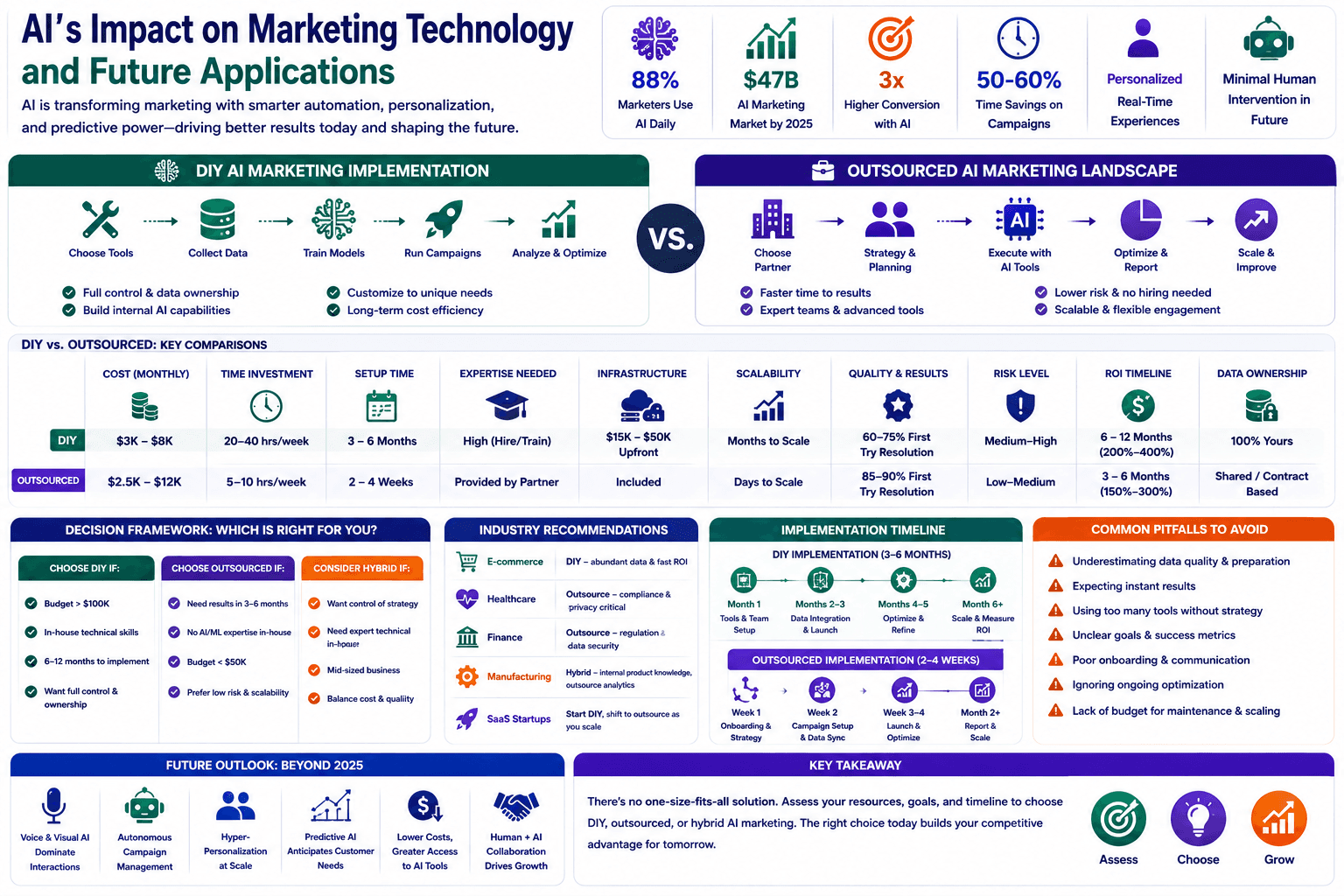
AI's Impact on Marketing Technology
AI has revolutionized the way businesses utilize marketing tools. Marketing teams now leverage machine learning to predict trends, create content, and personalize messages. They employ chatbots for customer inquiries, automatically enhance ads, and customize emails for diverse audiences. These advancements reduce manual labor by up to 40% and significantly improve campaign outcomes. The shift from reactive to predictive marketing marks the most significant transformation in the past decade. For more on this topic, check out our page on Understanding Your Current Marketing Tech Stack.
The Future Landscape of AI Marketing Integration
By 2030, marketing technology will be seamlessly integrated and highly predictive. AI agents will autonomously manage entire campaign workflows, from strategy to execution. Real-time personalization will engage individual customers at every touchpoint. Voice and visual search optimization will become standard features in marketing tools. Instant data synchronization across platforms will eliminate data silos. Marketing teams will focus on creative strategy while AI handles technical tasks and optimization. Learn more about Choosing Compatible AI Tools for Your Current Systems.
Understanding Your Current Marketing Tech Stack
Begin by outlining your current marketing technology setup. List all tools, such as CRM systems, email marketing tools, social media schedulers, analytics platforms, and content management systems. Identify how data flows between these tools and where manual steps cause delays. Determine which systems have open APIs for integration and which do not. This review highlights integration opportunities and potential challenges before selecting AI solutions. For insights on integration, visit our page on Identifying Integration Opportunities and Pain Points.
Identifying Integration Opportunities and Pain Points
Examine your marketing workflows to identify repetitive tasks that consume significant time. Pinpoint bottlenecks where data transfer between systems causes delays or requires manual intervention. Common issues include delays in lead scoring, content approval processes, campaign performance reporting, and customer segmentation updates. Document these challenges with time estimates and frequency. This analysis helps prioritize AI integrations for the most impact and quickest return on investment. For more strategies, see our guide on Workflow Automation Between AI and Legacy Tools.
Choosing Compatible AI Tools for Your Current Systems
Select AI tools that integrate seamlessly with your marketing platforms. Look for pre-built connectors with your CRM, email software, and analytics tools. Focus on solutions compatible with your current data formats, avoiding the need for a full system overhaul. Choose tools with robust APIs and webhook capabilities. Consider cloud-based AI options that connect easily through standard methods. Test them during trial periods to ensure smooth data flow between systems. For further details, refer to our section on Data Preparation and Quality Management.
Data Preparation and Quality Management
Prepare and organize your marketing data before integrating AI. Remove duplicate records, standardize names, and fill in missing information. Ensure data formats are consistent across all platforms. Merge data from various sources to create unified customer profiles. Establish data governance rules and regular cleanup schedules. Quality data directly impacts AI performance and accuracy, as poor data leads to unreliable outputs and failed integrations. Explore our page on API Connections and Technical Integration Methods for more information.
API Connections and Technical Integration Methods
Connect your AI tools to marketing platforms using APIs for real-time data exchange. Utilize middleware like Zapier or Microsoft Power Automate to link systems without coding. Set up webhooks for instant data updates between platforms. Use batch processing for large data transfers during off-peak hours. Test all connections before going live. Monitor API performance and establish backup data sync methods to prevent failures. For insights on Team Training and Change Management Strategies, check our dedicated section.
Workflow Automation Between AI and Legacy Tools
Create automated workflows that integrate AI tools with your current marketing platforms using integration platforms like Zapier or Microsoft Power Automate. Set up actions that trigger automatically, so AI insights update CRM records, initiate email campaigns, or adjust ad spending. Schedule data syncs to maintain system alignment. Map data fields between platforms to ensure consistent information flow. Test workflows thoroughly before deployment to avoid data conflicts or duplicate processes. For measuring success, visit our page on Measuring Integration Success and ROI.
Team Training and Change Management Strategies
Designate AI champions within each marketing team to guide adoption and troubleshoot issues. Provide hands-on training focused on specific tasks. Demonstrate quick wins to overcome resistance and save time. Develop guides for common tasks and best practices. Start with simple projects to build confidence. Clearly communicate how AI enhances human creativity and strategic thinking in marketing roles. For common challenges, see our section on Common Integration Challenges and Solutions.
Measuring Integration Success and ROI
Track time saved on repetitive tasks like content creation and data analysis. Monitor improvements in content quality and campaign performance. Calculate cost reductions from automation and increased efficiency. Measure gains in team productivity and customer engagement. Assess improvements in data accuracy and decision-making speed. Use before-and-after comparisons to quantify AI impact. Set specific KPIs for each tool and review monthly performance against baseline metrics. For budgeting insights, refer to our page on Cost Management and Budget Planning.
Common Integration Challenges and Solutions
Data compatibility issues arise when AI tools cannot access existing databases. Solution: Use middleware platforms or APIs to bridge data. Team resistance occurs due to fear of job loss. Solution: Train staff to view AI as an enhancement, not a replacement. Budget overruns result from unexpected integration costs. Solution: Start with pilot programs and scale gradually. Technical complexity can overwhelm IT teams. Solution: Choose user-friendly AI tools with strong vendor support and documentation. For future-proofing strategies, check out our guide on Future Proofing Your Marketing Technology Stack.
Security and Compliance Considerations
Safeguard customer data with robust security measures. Encrypt data transfers between AI tools and existing systems. Comply with GDPR and CCPA regulations when AI handles personal information. Implement access controls to limit visibility of AI-generated customer insights. Conduct regular security audits to ensure AI tools meet industry standards. Develop data governance policies to manage how AI systems handle sensitive marketing data and customer information.
Cost Management and Budget Planning
Initiate your AI integration budget with a single tool rather than multiple ones. Calculate savings from tasks like content creation and data analysis. Include training costs, API fees, and subscription expenses. Track monthly spending on AI tools and compare it to productivity gains. Allocate 20% of your marketing technology budget for AI. Use phased rollouts to spread costs over time and demonstrate ROI before expanding AI marketing tools. For scaling insights, see our page on Scaling Your AI Integration Over Time.
Scaling Your AI Integration Over Time
Begin with one AI tool and master it before adding others. Track team usage and adoption rates. Introduce tools that complement existing ones. Establish clear procedures for evaluating new AI marketing tools. Develop in-house expertise with dedicated AI specialists. Review progress quarterly to identify growth opportunities. Consider enterprise versions when advanced features are needed. Focus on solving specific problems rather than accumulating more AI tools. For real-world examples, visit our section on Real World Integration Success Stories.
Real World Integration Success Stories
HubSpot implemented AI chatbots with their CRM, reducing response times by 60% while maintaining customer data integrity. Spotify integrated AI recommendation engines into their marketing system, boosting email engagement by 40%. Adobe combined AI content tools with their creative work, halving campaign development time. These companies succeeded by starting small, targeting specific tasks, and ensuring their AI tools enhanced rather than replaced existing processes.
Future Proofing Your Marketing Technology Stack
Create a flexible setup that adapts to new AI technologies. Choose platforms with open APIs and regular updates. Utilize cloud-based solutions that can scale as needed. Educate teams on AI fundamentals, not just tool usage. Establish data standards compatible with various systems. Include integration costs in annual budgets. Monitor AI trends regularly and test new tools in controlled environments. Maintain backup systems during transitions. Document all integrations for future reference and troubleshooting.
Transform your marketing with AI tools. Learn integration strategies, automation workflows, and ROI optimization in our complete 2026 guide.
AI's Impact on Marketing Technology
AI has revolutionized the way businesses utilize marketing tools. Marketing teams now leverage machine learning to predict trends, create content, and personalize messages. They employ chatbots for customer inquiries, automatically enhance ads, and customize emails for diverse audiences. These advancements reduce manual labor by up to 40% and significantly improve campaign outcomes. The shift from reactive to predictive marketing marks the most significant transformation in the past decade. For more on this topic, check out our page on Understanding Your Current Marketing Tech Stack.
The Future Landscape of AI Marketing Integration
By 2030, marketing technology will be seamlessly integrated and highly predictive. AI agents will autonomously manage entire campaign workflows, from strategy to execution. Real-time personalization will engage individual customers at every touchpoint. Voice and visual search optimization will become standard features in marketing tools. Instant data synchronization across platforms will eliminate data silos. Marketing teams will focus on creative strategy while AI handles technical tasks and optimization. Learn more about Choosing Compatible AI Tools for Your Current Systems.
Understanding Your Current Marketing Tech Stack
Begin by outlining your current marketing technology setup. List all tools, such as CRM systems, email marketing tools, social media schedulers, analytics platforms, and content management systems. Identify how data flows between these tools and where manual steps cause delays. Determine which systems have open APIs for integration and which do not. This review highlights integration opportunities and potential challenges before selecting AI solutions. For insights on integration, visit our page on Identifying Integration Opportunities and Pain Points.
Identifying Integration Opportunities and Pain Points
Examine your marketing workflows to identify repetitive tasks that consume significant time. Pinpoint bottlenecks where data transfer between systems causes delays or requires manual intervention. Common issues include delays in lead scoring, content approval processes, campaign performance reporting, and customer segmentation updates. Document these challenges with time estimates and frequency. This analysis helps prioritize AI integrations for the most impact and quickest return on investment. For more strategies, see our guide on Workflow Automation Between AI and Legacy Tools.
Choosing Compatible AI Tools for Your Current Systems
Select AI tools that integrate seamlessly with your marketing platforms. Look for pre-built connectors with your CRM, email software, and analytics tools. Focus on solutions compatible with your current data formats, avoiding the need for a full system overhaul. Choose tools with robust APIs and webhook capabilities. Consider cloud-based AI options that connect easily through standard methods. Test them during trial periods to ensure smooth data flow between systems. For further details, refer to our section on Data Preparation and Quality Management.
Data Preparation and Quality Management
Prepare and organize your marketing data before integrating AI. Remove duplicate records, standardize names, and fill in missing information. Ensure data formats are consistent across all platforms. Merge data from various sources to create unified customer profiles. Establish data governance rules and regular cleanup schedules. Quality data directly impacts AI performance and accuracy, as poor data leads to unreliable outputs and failed integrations. Explore our page on API Connections and Technical Integration Methods for more information.
API Connections and Technical Integration Methods
Connect your AI tools to marketing platforms using APIs for real-time data exchange. Utilize middleware like Zapier or Microsoft Power Automate to link systems without coding. Set up webhooks for instant data updates between platforms. Use batch processing for large data transfers during off-peak hours. Test all connections before going live. Monitor API performance and establish backup data sync methods to prevent failures. For insights on Team Training and Change Management Strategies, check our dedicated section.
Workflow Automation Between AI and Legacy Tools
Create automated workflows that integrate AI tools with your current marketing platforms using integration platforms like Zapier or Microsoft Power Automate. Set up actions that trigger automatically, so AI insights update CRM records, initiate email campaigns, or adjust ad spending. Schedule data syncs to maintain system alignment. Map data fields between platforms to ensure consistent information flow. Test workflows thoroughly before deployment to avoid data conflicts or duplicate processes. For measuring success, visit our page on Measuring Integration Success and ROI.
Team Training and Change Management Strategies
Designate AI champions within each marketing team to guide adoption and troubleshoot issues. Provide hands-on training focused on specific tasks. Demonstrate quick wins to overcome resistance and save time. Develop guides for common tasks and best practices. Start with simple projects to build confidence. Clearly communicate how AI enhances human creativity and strategic thinking in marketing roles. For common challenges, see our section on Common Integration Challenges and Solutions.
Measuring Integration Success and ROI
Track time saved on repetitive tasks like content creation and data analysis. Monitor improvements in content quality and campaign performance. Calculate cost reductions from automation and increased efficiency. Measure gains in team productivity and customer engagement. Assess improvements in data accuracy and decision-making speed. Use before-and-after comparisons to quantify AI impact. Set specific KPIs for each tool and review monthly performance against baseline metrics. For budgeting insights, refer to our page on Cost Management and Budget Planning.
Common Integration Challenges and Solutions
Data compatibility issues arise when AI tools cannot access existing databases. Solution: Use middleware platforms or APIs to bridge data. Team resistance occurs due to fear of job loss. Solution: Train staff to view AI as an enhancement, not a replacement. Budget overruns result from unexpected integration costs. Solution: Start with pilot programs and scale gradually. Technical complexity can overwhelm IT teams. Solution: Choose user-friendly AI tools with strong vendor support and documentation. For future-proofing strategies, check out our guide on Future Proofing Your Marketing Technology Stack.
Security and Compliance Considerations
Safeguard customer data with robust security measures. Encrypt data transfers between AI tools and existing systems. Comply with GDPR and CCPA regulations when AI handles personal information. Implement access controls to limit visibility of AI-generated customer insights. Conduct regular security audits to ensure AI tools meet industry standards. Develop data governance policies to manage how AI systems handle sensitive marketing data and customer information.
Cost Management and Budget Planning
Initiate your AI integration budget with a single tool rather than multiple ones. Calculate savings from tasks like content creation and data analysis. Include training costs, API fees, and subscription expenses. Track monthly spending on AI tools and compare it to productivity gains. Allocate 20% of your marketing technology budget for AI. Use phased rollouts to spread costs over time and demonstrate ROI before expanding AI marketing tools. For scaling insights, see our page on Scaling Your AI Integration Over Time.
Scaling Your AI Integration Over Time
Begin with one AI tool and master it before adding others. Track team usage and adoption rates. Introduce tools that complement existing ones. Establish clear procedures for evaluating new AI marketing tools. Develop in-house expertise with dedicated AI specialists. Review progress quarterly to identify growth opportunities. Consider enterprise versions when advanced features are needed. Focus on solving specific problems rather than accumulating more AI tools. For real-world examples, visit our section on Real World Integration Success Stories.
Real World Integration Success Stories
HubSpot implemented AI chatbots with their CRM, reducing response times by 60% while maintaining customer data integrity. Spotify integrated AI recommendation engines into their marketing system, boosting email engagement by 40%. Adobe combined AI content tools with their creative work, halving campaign development time. These companies succeeded by starting small, targeting specific tasks, and ensuring their AI tools enhanced rather than replaced existing processes.
Future Proofing Your Marketing Technology Stack
Create a flexible setup that adapts to new AI technologies. Choose platforms with open APIs and regular updates. Utilize cloud-based solutions that can scale as needed. Educate teams on AI fundamentals, not just tool usage. Establish data standards compatible with various systems. Include integration costs in annual budgets. Monitor AI trends regularly and test new tools in controlled environments. Maintain backup systems during transitions. Document all integrations for future reference and troubleshooting.
บล็อกอื่น ๆ
บล็อกอื่น ๆ
ตรวจสอบบล็อกโครงการอื่น ๆ ของเราที่มีข้อมูลเชิงลึกและข้อมูลที่เป็นประโยชน์สำหรับธุรกิจของคุณ
บล็อกอื่น ๆ
บล็อกอื่น ๆ
ตรวจสอบบล็อกโครงการอื่น ๆ ของเราที่มีข้อมูลเชิงลึกและข้อมูลที่เป็นประโยชน์สำหรับธุรกิจของคุณ