
Our Three Step Process
20 พฤษภาคม 2569
How AI Transformed Marketing Technology and Its Future Prospects
Our Three Step Process
20 พฤษภาคม 2569
How AI Transformed Marketing Technology and Its Future Prospects
Discover how AI-powered automation and personalization are reshaping the marketing landscape. Get ahead with AI-powered growth strategies and the latest insights on upcoming trends.
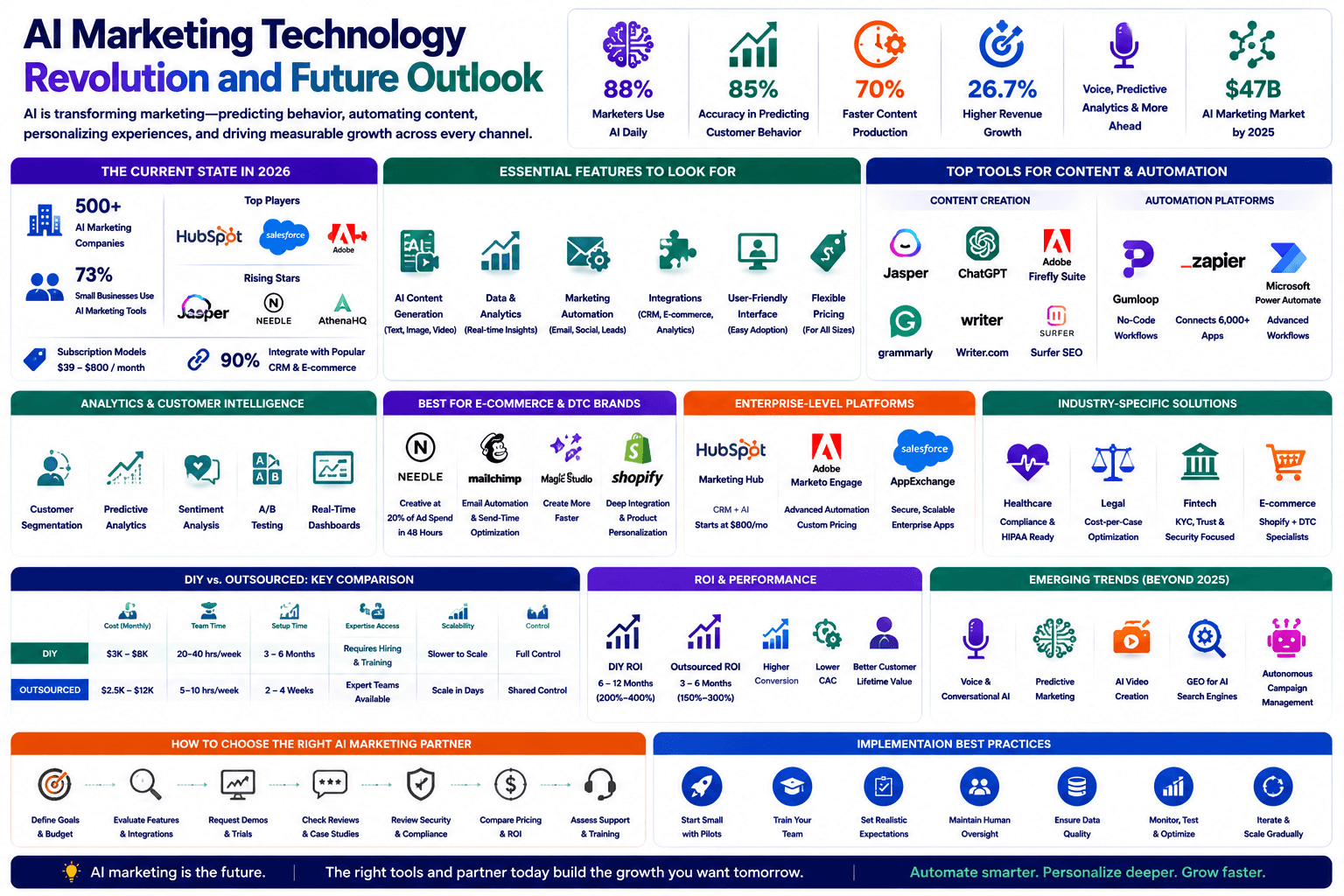
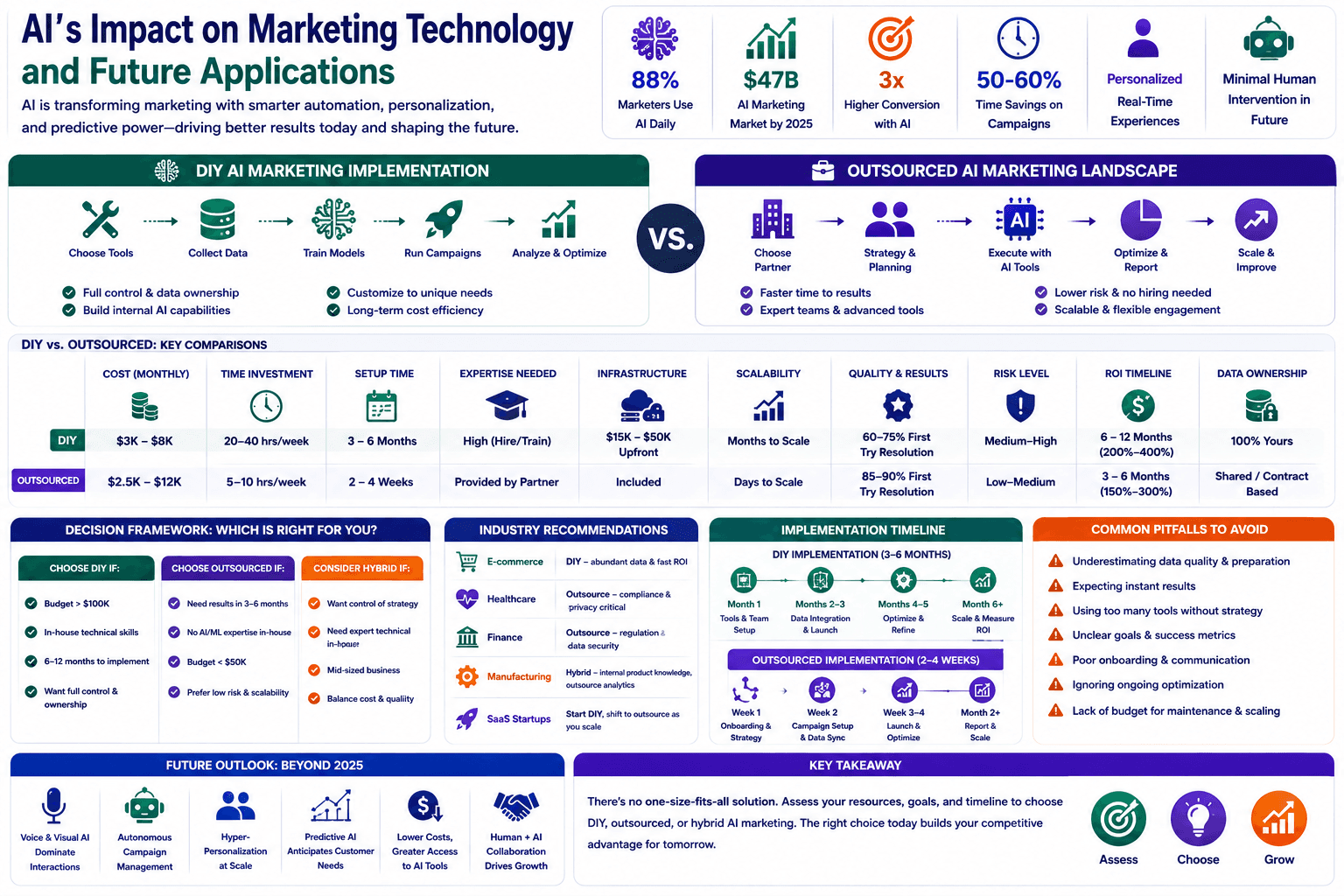
AI has revolutionized the way businesses connect with customers through automated personalization, predictive analytics, and real-time decision-making. Machine learning analyzes large datasets to identify consumer patterns, optimize ad spending, and deliver targeted content across multiple channels. Marketing platforms leverage AI to score leads, segment audiences, and send personalized emails based on user actions. Looking ahead, generative AI will facilitate large-scale content creation, while advanced neural networks will enhance predictions of customer lifetime value. Voice and visual search, augmented reality, and conversational AI will become standard tools, enabling brands to engage customers through immersive, relevant interactions at every touchpoint. For more insights on AI's impact, check out our article on Future Trends in AI Marketing Technology.
Core Components of an AI Marketing Framework
Data Infrastructure and Management Systems
To develop effective AI for marketing, consolidate data from CRM systems, social media, website analytics, and customer interactions in a centralized location. Utilize cloud storage for real-time processing while adhering to privacy regulations. Learn more about Data Management Best Practices.
AI Tool Integration and Selection
Choose marketing automation tools that align with your business objectives. Essential tools include customer segmentation software, predictive analytics, chatbots, and content creation systems. Use APIs to integrate these tools with your existing marketing infrastructure. For a deeper dive into tool selection, visit our guide on Choosing the Right Marketing Tools.
Predictive Analytics Implementation
Employ machine learning models to forecast customer behavior, identify high-value prospects, and determine optimal campaign timings. These systems analyze past purchase data, engagement patterns, and demographics to tailor marketing messages. Implement scoring models to rank leads by conversion likelihood, use churn prediction tools for timely retention efforts, and apply forecasting models to anticipate seasonal demand changes. Establish automated triggers for specific marketing actions and regularly update algorithms with new data to maintain prediction accuracy. Explore more on Predictive Analytics Strategies.
Personalization at Scale Through Machine Learning
AI enables businesses to deliver personalized experiences to millions of customers simultaneously. Machine learning examines user behavior, purchase history, browsing habits, and demographic data to create detailed customer profiles. These systems segment audiences based on preferences, lifecycle stage, and engagement levels. Dynamic content optimization adjusts website elements, emails, and product recommendations in real-time for each visitor. Recommendation engines suggest products or services based on similar customer behaviors and preferences. Automated A/B testing refines personalization strategies by experimenting with different approaches for customer groups. Behavioral triggers send personalized messages when customers perform actions like abandoning carts or browsing specific categories, enhancing conversion rates, customer satisfaction, and lifetime value while reducing marketing waste. For more on personalization, see our article on Effective Personalization Techniques.
Cross-Cultural AI Marketing Strategies
AI assists global brands in navigating cultural differences while maintaining consistent messaging worldwide. Machine learning analyzes local consumer habits, cultural preferences, and market trends to tailor marketing strategies for each region. Language localization goes beyond translation, employing natural language processing to understand cultural context, idioms, and local expressions. AI identifies cultural sensitivities and adjusts visuals, message tone, and product placement accordingly. Analyzing regional consumer behavior allows brands to understand unique buying habits, preferred communication methods, and decision-making styles, guiding marketing campaigns that resonate with local audiences while upholding the brand's global identity and values. For insights on global marketing, check out our piece on Cross-Cultural Marketing Strategies.
Omnichannel AI Marketing Coordination
AI facilitates seamless customer experiences across all marketing channels by analyzing user interactions and optimizing touchpoints in real-time. It tracks customer journeys from social media to email, websites, and mobile apps, ensuring consistent messaging and personalized content. Smart models help marketers identify which channels drive conversions and allocate budgets effectively. AI adjusts campaign settings based on performance, reallocating resources to the most successful channels while maintaining brand consistency. By integrating data from all channels, AI recognizes customers regardless of entry point, offering personalized recommendations and content. This approach enhances customer satisfaction, reduces marketing waste, and increases campaign effectiveness through intelligent automation and real-time improvements across digital touchpoints. For more on omnichannel strategies, see our article on Building an Omnichannel Experience.
Ethical AI Marketing Practices
Implementing AI in marketing requires responsible practices to maintain customer trust and comply with regulations. Protect privacy by securing customer data with encryption, anonymization, and strict access controls while adhering to laws like GDPR. Regularly audit machine learning models to ensure fairness and prevent bias, using diverse training data to avoid discriminatory targeting and personalization. Be transparent about AI's role in customer experiences, explaining data usage, offering opt-out options, and maintaining human oversight of AI systems. Ethical AI marketing fosters strong customer relationships by respecting privacy, ensuring fairness, and maintaining transparency in all automated processes and data handling. For more on ethical practices, read our guide on Ethical Marketing in the Digital Age.
Case Studies: Netflix, Unilever, and Alibaba
Netflix leverages AI to enhance marketing through its recommendation engine, analyzing viewing habits to suggest shows and refine advertisements. It processes user data to craft personalized messages for different regions. Unilever employs AI for its beauty brands, offering tailored experiences by understanding customer preferences and suggesting products. This AI-driven approach accelerates and optimizes their global marketing efforts. Alibaba utilizes AI chatbots to engage over a billion customers, providing personalized shopping experiences and targeted marketing. Their AI analyzes consumer behavior to improve communication and boost sales across diverse markets. For more case studies, check out our section on Successful AI Implementations.
Measuring AI Marketing Performance
Key Performance Indicators for AI Campaigns
Monitor metrics that reflect AI's impact on marketing outcomes, such as click-through rates, conversion rates, and customer lifetime value. Evaluate engagement rates at various AI-powered touchpoints.
ROI Assessment Methods
Assess return on investment by comparing AI costs with revenue growth, examining improvements in cost per acquisition and customer retention rates, and tracking efficiency gains from automated processes. For detailed ROI strategies, see our article on Measuring Marketing ROI.
Continuous Optimization Strategies
Implement systems that monitor performance and adjust campaigns in real-time. Use A/B testing to compare AI strategies with traditional methods and establish feedback loops for AI to learn from results and enhance future performance. For more on optimization, visit our guide on Continuous Improvement in Marketing.
Future Trends in AI Marketing Technology
AI in marketing will continue to evolve as generative AI produces content tailored to individual preferences in real-time. Voice and visual search will become prevalent as conversational tools gain popularity. Predictive tools will map customer journeys, anticipating needs before they are expressed for proactive engagement. AI-powered augmented reality will transform product demonstrations and offer virtual try-ons. Blockchain will enhance data transparency and build trust in AI-driven personalization. Edge computing will accelerate AI processing for rapid customer responses. AI will unify customer experiences across platforms, with emotional AI detecting sentiments and adjusting messages accordingly. Quantum computing will manage large datasets for precise and swift marketing. For insights on future trends, see our article on Emerging Technologies in Marketing.
Implementation Roadmap for Businesses
Begin by assessing your current marketing technology landscape to identify AI opportunities. Define clear objectives and metrics for success before selecting AI tools. Start with small projects like email personalization or chatbots to evaluate effectiveness. Establish a robust data collection system from all customer interactions. Train your marketing team on AI tools and ensure they understand how to leverage AI insights. Develop a feedback mechanism to continuously refine AI based on real-world outcomes. Establish guidelines for ethical AI use and comply with data privacy regulations. Gradually scale successful projects while monitoring performance, and plan for ongoing AI updates and team training to maintain a competitive edge. For a comprehensive roadmap, check out our guide on Implementing AI in Marketing.
Discover how AI-powered automation and personalization are reshaping the marketing landscape. Get ahead with AI-powered growth strategies and the latest insights on upcoming trends.
AI has revolutionized the way businesses connect with customers through automated personalization, predictive analytics, and real-time decision-making. Machine learning analyzes large datasets to identify consumer patterns, optimize ad spending, and deliver targeted content across multiple channels. Marketing platforms leverage AI to score leads, segment audiences, and send personalized emails based on user actions. Looking ahead, generative AI will facilitate large-scale content creation, while advanced neural networks will enhance predictions of customer lifetime value. Voice and visual search, augmented reality, and conversational AI will become standard tools, enabling brands to engage customers through immersive, relevant interactions at every touchpoint. For more insights on AI's impact, check out our article on Future Trends in AI Marketing Technology.
Core Components of an AI Marketing Framework
Data Infrastructure and Management Systems
To develop effective AI for marketing, consolidate data from CRM systems, social media, website analytics, and customer interactions in a centralized location. Utilize cloud storage for real-time processing while adhering to privacy regulations. Learn more about Data Management Best Practices.
AI Tool Integration and Selection
Choose marketing automation tools that align with your business objectives. Essential tools include customer segmentation software, predictive analytics, chatbots, and content creation systems. Use APIs to integrate these tools with your existing marketing infrastructure. For a deeper dive into tool selection, visit our guide on Choosing the Right Marketing Tools.
Predictive Analytics Implementation
Employ machine learning models to forecast customer behavior, identify high-value prospects, and determine optimal campaign timings. These systems analyze past purchase data, engagement patterns, and demographics to tailor marketing messages. Implement scoring models to rank leads by conversion likelihood, use churn prediction tools for timely retention efforts, and apply forecasting models to anticipate seasonal demand changes. Establish automated triggers for specific marketing actions and regularly update algorithms with new data to maintain prediction accuracy. Explore more on Predictive Analytics Strategies.
Personalization at Scale Through Machine Learning
AI enables businesses to deliver personalized experiences to millions of customers simultaneously. Machine learning examines user behavior, purchase history, browsing habits, and demographic data to create detailed customer profiles. These systems segment audiences based on preferences, lifecycle stage, and engagement levels. Dynamic content optimization adjusts website elements, emails, and product recommendations in real-time for each visitor. Recommendation engines suggest products or services based on similar customer behaviors and preferences. Automated A/B testing refines personalization strategies by experimenting with different approaches for customer groups. Behavioral triggers send personalized messages when customers perform actions like abandoning carts or browsing specific categories, enhancing conversion rates, customer satisfaction, and lifetime value while reducing marketing waste. For more on personalization, see our article on Effective Personalization Techniques.
Cross-Cultural AI Marketing Strategies
AI assists global brands in navigating cultural differences while maintaining consistent messaging worldwide. Machine learning analyzes local consumer habits, cultural preferences, and market trends to tailor marketing strategies for each region. Language localization goes beyond translation, employing natural language processing to understand cultural context, idioms, and local expressions. AI identifies cultural sensitivities and adjusts visuals, message tone, and product placement accordingly. Analyzing regional consumer behavior allows brands to understand unique buying habits, preferred communication methods, and decision-making styles, guiding marketing campaigns that resonate with local audiences while upholding the brand's global identity and values. For insights on global marketing, check out our piece on Cross-Cultural Marketing Strategies.
Omnichannel AI Marketing Coordination
AI facilitates seamless customer experiences across all marketing channels by analyzing user interactions and optimizing touchpoints in real-time. It tracks customer journeys from social media to email, websites, and mobile apps, ensuring consistent messaging and personalized content. Smart models help marketers identify which channels drive conversions and allocate budgets effectively. AI adjusts campaign settings based on performance, reallocating resources to the most successful channels while maintaining brand consistency. By integrating data from all channels, AI recognizes customers regardless of entry point, offering personalized recommendations and content. This approach enhances customer satisfaction, reduces marketing waste, and increases campaign effectiveness through intelligent automation and real-time improvements across digital touchpoints. For more on omnichannel strategies, see our article on Building an Omnichannel Experience.
Ethical AI Marketing Practices
Implementing AI in marketing requires responsible practices to maintain customer trust and comply with regulations. Protect privacy by securing customer data with encryption, anonymization, and strict access controls while adhering to laws like GDPR. Regularly audit machine learning models to ensure fairness and prevent bias, using diverse training data to avoid discriminatory targeting and personalization. Be transparent about AI's role in customer experiences, explaining data usage, offering opt-out options, and maintaining human oversight of AI systems. Ethical AI marketing fosters strong customer relationships by respecting privacy, ensuring fairness, and maintaining transparency in all automated processes and data handling. For more on ethical practices, read our guide on Ethical Marketing in the Digital Age.
Case Studies: Netflix, Unilever, and Alibaba
Netflix leverages AI to enhance marketing through its recommendation engine, analyzing viewing habits to suggest shows and refine advertisements. It processes user data to craft personalized messages for different regions. Unilever employs AI for its beauty brands, offering tailored experiences by understanding customer preferences and suggesting products. This AI-driven approach accelerates and optimizes their global marketing efforts. Alibaba utilizes AI chatbots to engage over a billion customers, providing personalized shopping experiences and targeted marketing. Their AI analyzes consumer behavior to improve communication and boost sales across diverse markets. For more case studies, check out our section on Successful AI Implementations.
Measuring AI Marketing Performance
Key Performance Indicators for AI Campaigns
Monitor metrics that reflect AI's impact on marketing outcomes, such as click-through rates, conversion rates, and customer lifetime value. Evaluate engagement rates at various AI-powered touchpoints.
ROI Assessment Methods
Assess return on investment by comparing AI costs with revenue growth, examining improvements in cost per acquisition and customer retention rates, and tracking efficiency gains from automated processes. For detailed ROI strategies, see our article on Measuring Marketing ROI.
Continuous Optimization Strategies
Implement systems that monitor performance and adjust campaigns in real-time. Use A/B testing to compare AI strategies with traditional methods and establish feedback loops for AI to learn from results and enhance future performance. For more on optimization, visit our guide on Continuous Improvement in Marketing.
Future Trends in AI Marketing Technology
AI in marketing will continue to evolve as generative AI produces content tailored to individual preferences in real-time. Voice and visual search will become prevalent as conversational tools gain popularity. Predictive tools will map customer journeys, anticipating needs before they are expressed for proactive engagement. AI-powered augmented reality will transform product demonstrations and offer virtual try-ons. Blockchain will enhance data transparency and build trust in AI-driven personalization. Edge computing will accelerate AI processing for rapid customer responses. AI will unify customer experiences across platforms, with emotional AI detecting sentiments and adjusting messages accordingly. Quantum computing will manage large datasets for precise and swift marketing. For insights on future trends, see our article on Emerging Technologies in Marketing.
Implementation Roadmap for Businesses
Begin by assessing your current marketing technology landscape to identify AI opportunities. Define clear objectives and metrics for success before selecting AI tools. Start with small projects like email personalization or chatbots to evaluate effectiveness. Establish a robust data collection system from all customer interactions. Train your marketing team on AI tools and ensure they understand how to leverage AI insights. Develop a feedback mechanism to continuously refine AI based on real-world outcomes. Establish guidelines for ethical AI use and comply with data privacy regulations. Gradually scale successful projects while monitoring performance, and plan for ongoing AI updates and team training to maintain a competitive edge. For a comprehensive roadmap, check out our guide on Implementing AI in Marketing.
บล็อกอื่น ๆ
บล็อกอื่น ๆ
ตรวจสอบบล็อกโครงการอื่น ๆ ของเราที่มีข้อมูลเชิงลึกและข้อมูลที่เป็นประโยชน์สำหรับธุรกิจของคุณ
บล็อกอื่น ๆ
บล็อกอื่น ๆ
ตรวจสอบบล็อกโครงการอื่น ๆ ของเราที่มีข้อมูลเชิงลึกและข้อมูลที่เป็นประโยชน์สำหรับธุรกิจของคุณ