
Our Three Step Process
22 พฤษภาคม 2569
Marketing Technology 2026: AI-Powered MarTech Strategies & Implementation Guide
Our Three Step Process
22 พฤษภาคม 2569
Marketing Technology 2026: AI-Powered MarTech Strategies & Implementation Guide
Discover how AI is transforming marketing technology in 2026. Learn from case studies, implementation strategies & ROI measurement tips.
AI's Current Impact on the Marketing Technology Landscape
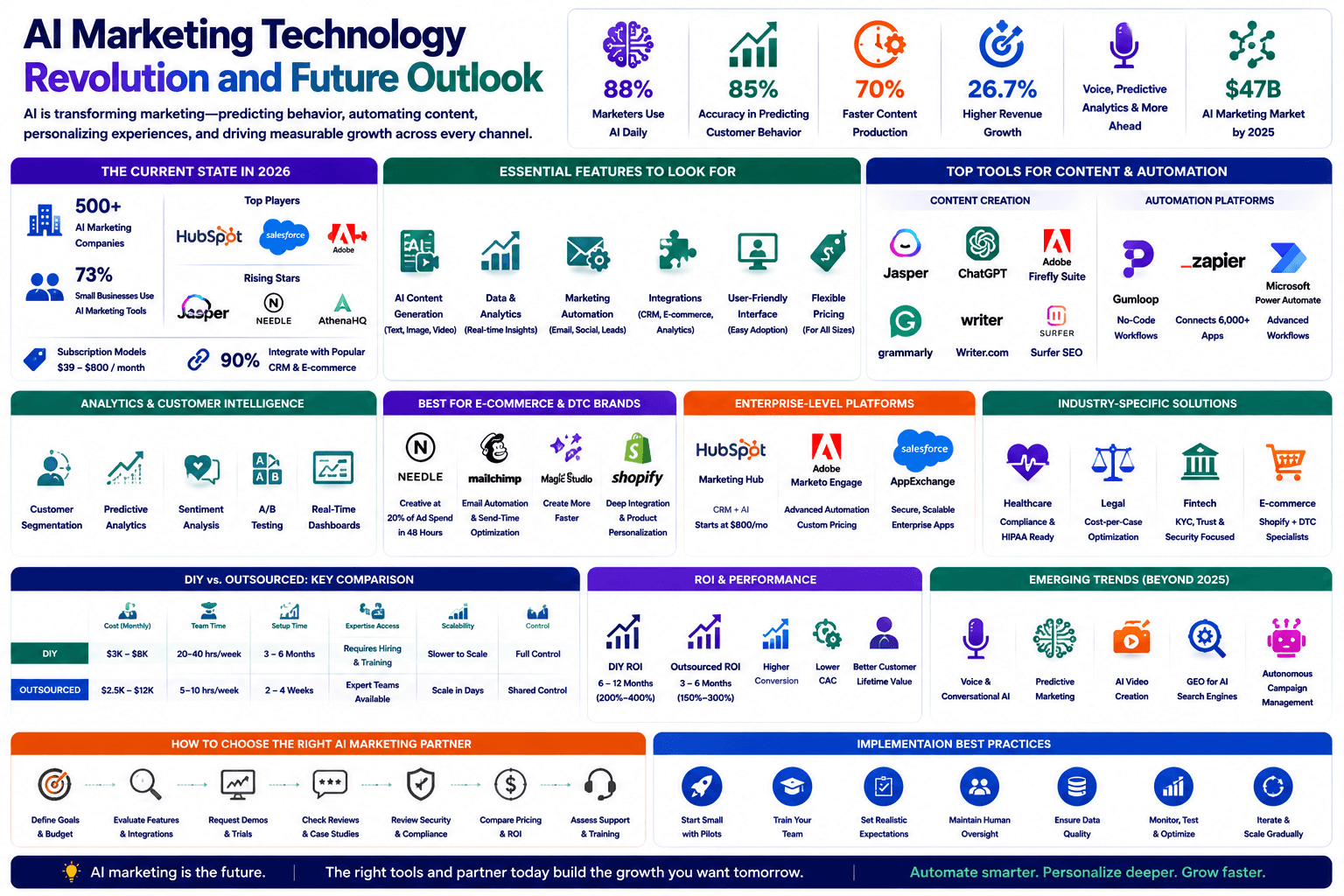
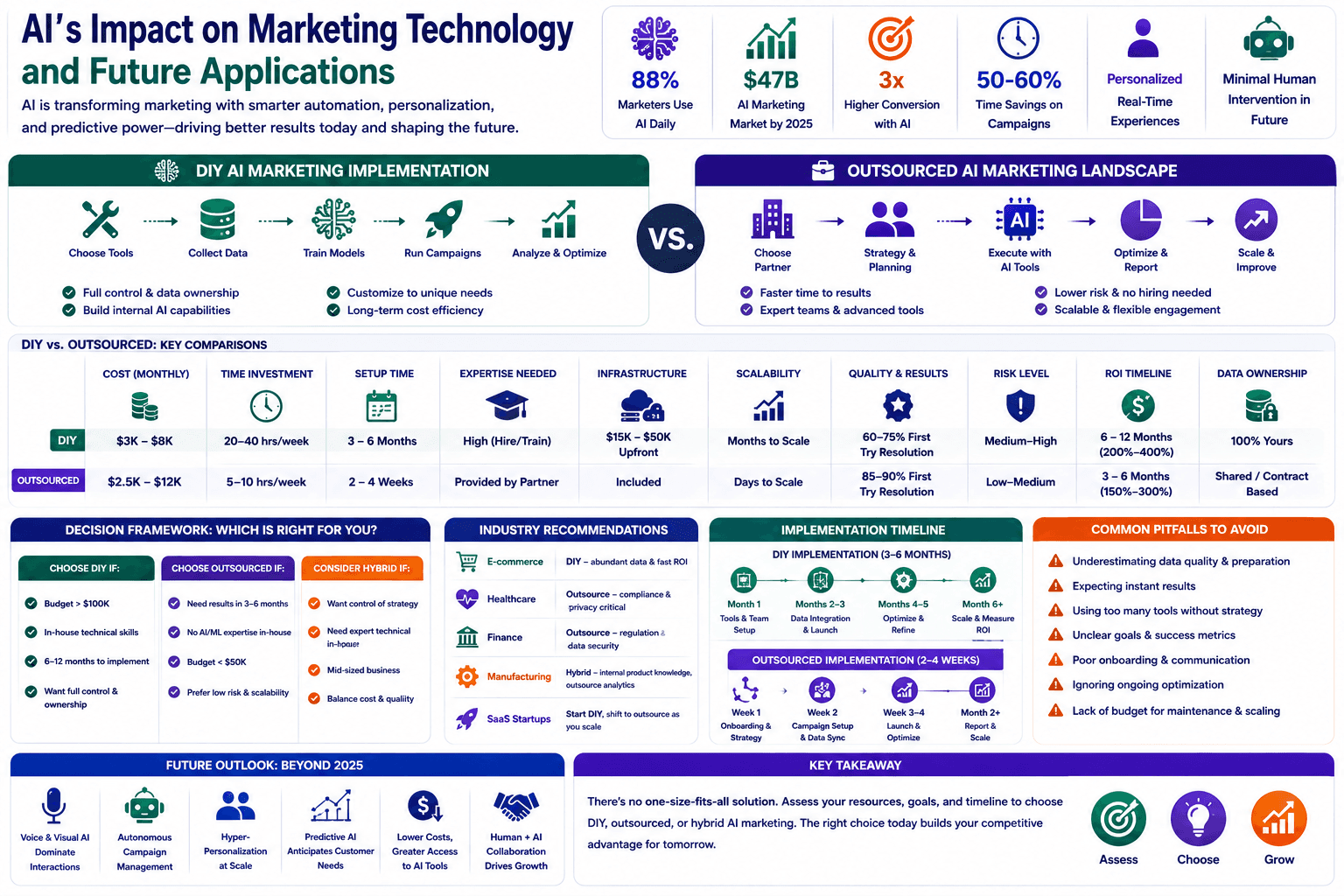
AI is revolutionizing the marketing technology landscape. Companies are leveraging AI to predict customer preferences, optimize pricing, and personalize experiences. This goes beyond basic automation to include intelligent systems capable of forecasting trends and making informed decisions. By 2026, AI will enable real-time customer segmentation, content creation, and cross-channel coordination. This evolution is transforming marketing from traditional methods to adaptive systems that respond to customer needs and market dynamics. For more insights on AI applications, check out our page on AI in Marketing.
From Digitalization to True Digital Transformation
Many companies remain in the digitalization phase, merely adding new tools to existing processes. They are more 'digitalized' than 'digitally transformed.' True transformation requires rethinking marketing strategies, not just adopting new software. Successful companies transcend basic automation by developing customer-focused strategies where marketing technology is integral to decision-making. This shift necessitates cultural change, new skills, and integrated systems, avoiding isolated tools that silo data. Learn more about Digital Transformation Strategies to enhance your approach.
Case Study: Nutella's AI-Powered Packaging Revolution
Nutella revolutionized its packaging design using AI to analyze consumer preferences across different markets. The AI examined data from social media, purchasing habits, and demographic trends to create personalized packaging. This initiative resulted in 7 million unique jar designs tailored to local tastes, boosting global sales by 3% and enhancing brand loyalty. Nutella's success illustrates how marketing technology can bridge creative design with data science, leveraging real-time consumer behavior instead of traditional focus groups for product decisions. For more case studies, visit our Success Stories page.
Case Study: Unilever's Consumer Intelligence Platform
In 2019, Unilever launched a consumer intelligence platform that aggregated 900 million records. This system employs AI and real-time data to analyze buying habits in 190 countries, utilizing social media feedback, purchase history, and demographics to predict demand and design targeted campaigns. This approach improved demand forecasting by 50% and reduced marketing waste by 30%. Unilever introduced 15 new brands using these AI insights, demonstrating how big data can transform traditional market research into predictive consumer systems. Explore our Big Data Insights for more on leveraging data in marketing.
Case Study: IKEA's Use of Augmented Reality
IKEA enhanced its customer experience with augmented reality (AR) through the IKEA Place app, allowing customers to visualize furniture in their homes before purchasing. This innovation reduced return rates by 64%. By integrating AR in showrooms, customers can scan products for additional details, reviews, and style tips. IKEA's acquisition of tech companies to bolster digital skills and the addition of smart home features increased customer engagement by 40% and online sales by 35%. This strategy exemplifies how AR can seamlessly connect physical and digital shopping experiences. For more on AR in marketing, check our Augmented Reality Solutions.
Key Success Factors in Strategic MarTech Implementation
Leading brands employ common strategies for effective marketing technology implementation. They begin with clear objectives, avoiding technology adoption for its own sake. A customer-centric focus ensures each tech solution enhances user experience. Successful companies invest in employee training and manage cultural changes to overcome resistance. Pilot programs test effectiveness before full-scale rollouts. Measurement systems with primary and secondary KPIs track ROI and allow for strategic adjustments based on data insights. Discover more about Effective MarTech Strategies to optimize your implementation.
Measuring ROI and Performance in AI Marketing Initiatives
Successful brands establish clear measurement frameworks with primary and secondary KPIs to evaluate AI marketing performance. Key indicators include conversion rates, customer engagement, and cost savings. Secondary metrics encompass brand awareness, customer satisfaction scores, and efficiency gains. Top companies recognize that improvements in one area might impact another, necessitating careful evaluation. Real-time analytics dashboards track campaign performance, enabling data-driven adjustments. Regular ROI assessments support ongoing investment in marketing tech and identify areas for improvement, facilitating the spread of successful strategies across the business. For detailed metrics, visit our Marketing Analytics page.
Common Barriers and How Leading Brands Overcame Them
Adopting marketing technology presents challenges, but top brands have found ways to succeed. Cultural resistance is a primary hurdle, with employees fearing job loss or struggling with new systems. Leading companies address this through comprehensive training and clear communication about technology benefits. Resource constraints, including budget limitations and skill gaps, also pose challenges. Brands like Starbucks and Nike tackled this by starting with pilot programs before scaling up. Data integration issues arise when linking old systems with new technology. Successful brands invest in robust data systems and collaborate with experts to bridge technical gaps. For more on overcoming challenges, see our MarTech Challenges page.
Future MarTech Trends: What's Next for 2026 and Beyond
Marketing technology is evolving towards conversational AI interfaces, enabling marketers to ask questions in natural language. Predictive analytics will become more proactive, identifying trends before they emerge. Virtual shopping advisors will expand beyond retail into B2B sectors, assisting with complex purchases. Real-time personalization will advance, with AI dynamically adjusting content based on subtle user interactions. Cross-platform attribution will improve as AI connects customer journeys across all touchpoints. Voice commerce will become standard, and augmented reality will integrate with social commerce platforms for immersive shopping experiences that seamlessly blend physical and digital worlds. Stay updated on Future Trends in MarTech for insights.
Actionable Takeaways for Your MarTech Strategy
Establish clear objectives before selecting marketing technology tools. Prioritize solutions that enhance customer experience. Introduce AI gradually with specific tasks like email personalization or predictive analysis. Train employees to facilitate the transition to new technologies. Define primary and secondary KPIs to measure success. Assemble teams with marketing, IT, and data science experts. Ensure data quality and integration across platforms. Explore conversational AI for faster data queries and improved decision-making. Partner with experienced MarTech consultants for strategic guidance and support. For more actionable insights, visit our MarTech Best Practices page.
Discover how AI is transforming marketing technology in 2026. Learn from case studies, implementation strategies & ROI measurement tips.
AI's Current Impact on the Marketing Technology Landscape
AI is revolutionizing the marketing technology landscape. Companies are leveraging AI to predict customer preferences, optimize pricing, and personalize experiences. This goes beyond basic automation to include intelligent systems capable of forecasting trends and making informed decisions. By 2026, AI will enable real-time customer segmentation, content creation, and cross-channel coordination. This evolution is transforming marketing from traditional methods to adaptive systems that respond to customer needs and market dynamics. For more insights on AI applications, check out our page on AI in Marketing.
From Digitalization to True Digital Transformation
Many companies remain in the digitalization phase, merely adding new tools to existing processes. They are more 'digitalized' than 'digitally transformed.' True transformation requires rethinking marketing strategies, not just adopting new software. Successful companies transcend basic automation by developing customer-focused strategies where marketing technology is integral to decision-making. This shift necessitates cultural change, new skills, and integrated systems, avoiding isolated tools that silo data. Learn more about Digital Transformation Strategies to enhance your approach.
Case Study: Nutella's AI-Powered Packaging Revolution
Nutella revolutionized its packaging design using AI to analyze consumer preferences across different markets. The AI examined data from social media, purchasing habits, and demographic trends to create personalized packaging. This initiative resulted in 7 million unique jar designs tailored to local tastes, boosting global sales by 3% and enhancing brand loyalty. Nutella's success illustrates how marketing technology can bridge creative design with data science, leveraging real-time consumer behavior instead of traditional focus groups for product decisions. For more case studies, visit our Success Stories page.
Case Study: Unilever's Consumer Intelligence Platform
In 2019, Unilever launched a consumer intelligence platform that aggregated 900 million records. This system employs AI and real-time data to analyze buying habits in 190 countries, utilizing social media feedback, purchase history, and demographics to predict demand and design targeted campaigns. This approach improved demand forecasting by 50% and reduced marketing waste by 30%. Unilever introduced 15 new brands using these AI insights, demonstrating how big data can transform traditional market research into predictive consumer systems. Explore our Big Data Insights for more on leveraging data in marketing.
Case Study: IKEA's Use of Augmented Reality
IKEA enhanced its customer experience with augmented reality (AR) through the IKEA Place app, allowing customers to visualize furniture in their homes before purchasing. This innovation reduced return rates by 64%. By integrating AR in showrooms, customers can scan products for additional details, reviews, and style tips. IKEA's acquisition of tech companies to bolster digital skills and the addition of smart home features increased customer engagement by 40% and online sales by 35%. This strategy exemplifies how AR can seamlessly connect physical and digital shopping experiences. For more on AR in marketing, check our Augmented Reality Solutions.
Key Success Factors in Strategic MarTech Implementation
Leading brands employ common strategies for effective marketing technology implementation. They begin with clear objectives, avoiding technology adoption for its own sake. A customer-centric focus ensures each tech solution enhances user experience. Successful companies invest in employee training and manage cultural changes to overcome resistance. Pilot programs test effectiveness before full-scale rollouts. Measurement systems with primary and secondary KPIs track ROI and allow for strategic adjustments based on data insights. Discover more about Effective MarTech Strategies to optimize your implementation.
Measuring ROI and Performance in AI Marketing Initiatives
Successful brands establish clear measurement frameworks with primary and secondary KPIs to evaluate AI marketing performance. Key indicators include conversion rates, customer engagement, and cost savings. Secondary metrics encompass brand awareness, customer satisfaction scores, and efficiency gains. Top companies recognize that improvements in one area might impact another, necessitating careful evaluation. Real-time analytics dashboards track campaign performance, enabling data-driven adjustments. Regular ROI assessments support ongoing investment in marketing tech and identify areas for improvement, facilitating the spread of successful strategies across the business. For detailed metrics, visit our Marketing Analytics page.
Common Barriers and How Leading Brands Overcame Them
Adopting marketing technology presents challenges, but top brands have found ways to succeed. Cultural resistance is a primary hurdle, with employees fearing job loss or struggling with new systems. Leading companies address this through comprehensive training and clear communication about technology benefits. Resource constraints, including budget limitations and skill gaps, also pose challenges. Brands like Starbucks and Nike tackled this by starting with pilot programs before scaling up. Data integration issues arise when linking old systems with new technology. Successful brands invest in robust data systems and collaborate with experts to bridge technical gaps. For more on overcoming challenges, see our MarTech Challenges page.
Future MarTech Trends: What's Next for 2026 and Beyond
Marketing technology is evolving towards conversational AI interfaces, enabling marketers to ask questions in natural language. Predictive analytics will become more proactive, identifying trends before they emerge. Virtual shopping advisors will expand beyond retail into B2B sectors, assisting with complex purchases. Real-time personalization will advance, with AI dynamically adjusting content based on subtle user interactions. Cross-platform attribution will improve as AI connects customer journeys across all touchpoints. Voice commerce will become standard, and augmented reality will integrate with social commerce platforms for immersive shopping experiences that seamlessly blend physical and digital worlds. Stay updated on Future Trends in MarTech for insights.
Actionable Takeaways for Your MarTech Strategy
Establish clear objectives before selecting marketing technology tools. Prioritize solutions that enhance customer experience. Introduce AI gradually with specific tasks like email personalization or predictive analysis. Train employees to facilitate the transition to new technologies. Define primary and secondary KPIs to measure success. Assemble teams with marketing, IT, and data science experts. Ensure data quality and integration across platforms. Explore conversational AI for faster data queries and improved decision-making. Partner with experienced MarTech consultants for strategic guidance and support. For more actionable insights, visit our MarTech Best Practices page.
บล็อกอื่น ๆ
บล็อกอื่น ๆ
ตรวจสอบบล็อกโครงการอื่น ๆ ของเราที่มีข้อมูลเชิงลึกและข้อมูลที่เป็นประโยชน์สำหรับธุรกิจของคุณ
บล็อกอื่น ๆ
บล็อกอื่น ๆ
ตรวจสอบบล็อกโครงการอื่น ๆ ของเราที่มีข้อมูลเชิงลึกและข้อมูลที่เป็นประโยชน์สำหรับธุรกิจของคุณ